
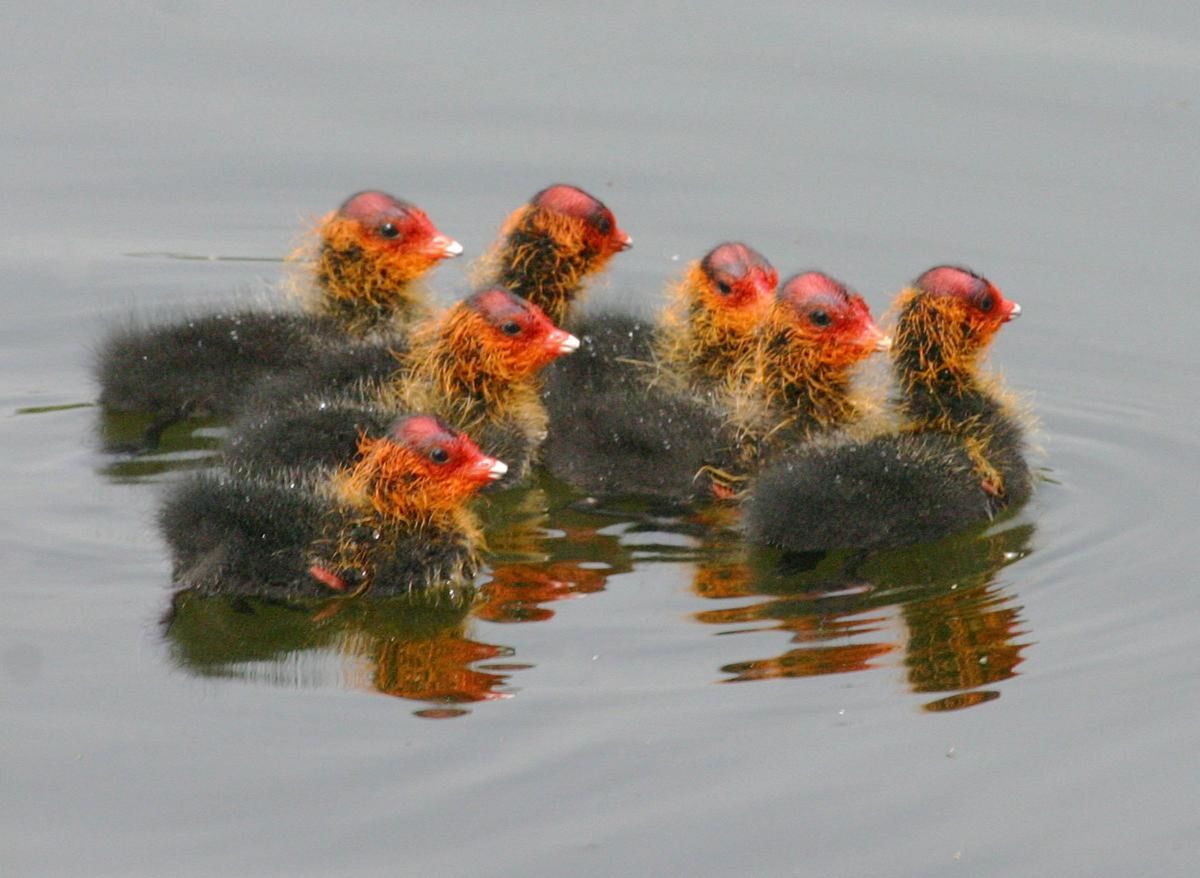
On calm ponds across Europe and Asia, a quiet drama plays out each spring. From the dark, slate-colored bodies of Eurasian coots emerge chicks so wildly different they look almost like another species. While adult coots wear a neat black plumage and a stark white facial shield, their young arrive as tiny explosions of color—scruffy black down, fiery orange heads, and tufts of golden-yellow fuzz glowing in the sunlight. Their bald, reddish faces and clownish whiskers make them appear both comical and oddly endearing.


This flamboyant look isn’t just for show. Biologists believe the chicks’ bright colors may serve as begging signals, advertising health and vigor to their parents. A chick with a blazing orange head is more likely to be fed, while weaker siblings may fade—sometimes fatally—under the tough love of coot parenting. Indeed, coots are notorious for brood reduction. When food is scarce, parents will peck at their own chicks, ensuring only the strongest survive.
Despite this harsh start, Eurasian coots are remarkably successful birds. Their chicks, once past the precarious early days, grow quickly, trading their fiery baby plumage for the sober black-and-white suit of adulthood. Within weeks, the once-vivid “ugly ducklings” blend into the flocks of their kind, indistinguishable from the parents that raised them with such ruthless efficiency.


In the end, the gaudy chaos of a Eurasian coot chick is fleeting—a flash of wild color on the water, a reminder that survival in nature often comes wrapped in both beauty and brutality.