
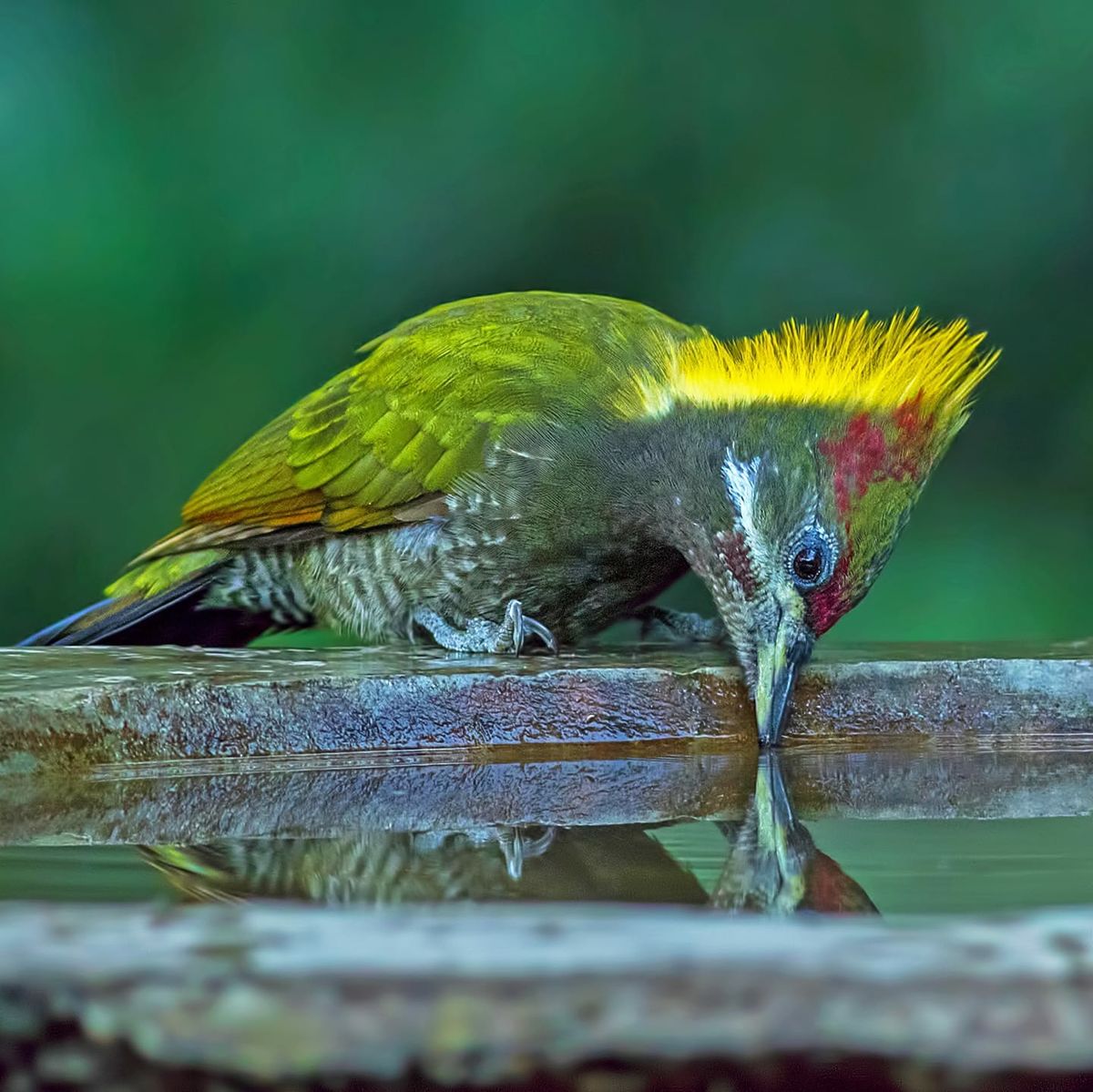
The Lesser Yellownape (Picus chlorolophus) is a medium-sized woodpecker found across South and Southeast Asia, from the Himalayan foothills to Vietnam and Indonesia. Named for the bright yellow patch on the back of its neck, this bird is a master of acoustic foraging — it doesn’t just peck randomly, it listens first.
Researchers have observed that the Lesser Yellownape uses its acute hearing to detect insects moving under bark before drilling. This strategy saves energy and reduces unnecessary damage to trees, a remarkable example of precision hunting in birds.


Its sturdy, chisel-shaped bill and shock-absorbing skull let it strike wood over 20 times per second without injury. Like most woodpeckers, it also uses its stiff tail feathers as a prop, anchoring itself vertically while hammering.
The species plays a key role in forest ecosystems: by excavating holes for nesting and feeding, it creates tree cavities later used by other animals — such as owls, squirrels, and small reptiles.
Lesser Yellownapes prefer forest edges and open woodlands but have shown adaptability to plantations and gardens, often seen methodically climbing trunks with soft, rhythmic taps.
In an ecosystem that thrives on sound and silence, the Lesser Yellownape listens, then strikes — a small but vital engineer of the Asian forest canopy.