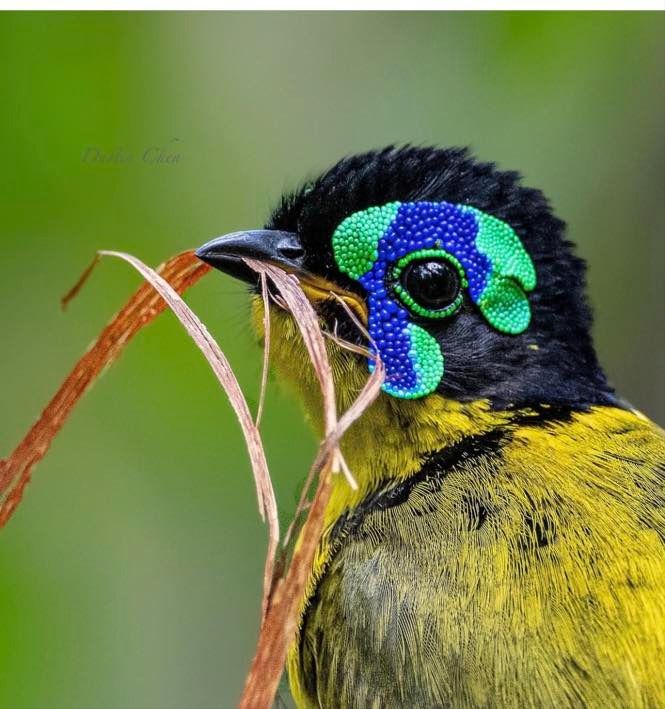


The Blue-banded Pitta (Erythropitta arquata) is one of Southeast Asia’s most enchanting yet elusive birds — a creature that glows like a gemstone in the shadows but vanishes the instant you try to approach. Found in the dense lowland and montane rainforests of Borneo, Sumatra, the Malay Peninsula, and Palawan, it lives quietly among damp leaves and moss, hidden from the world above.
The male’s beauty is nothing short of mesmerizing: a brilliant electric-blue band arcs across his crimson chest, framed by velvety black and chestnut plumage. In the dim forest light, this color seems almost unreal — a flash of sapphire against the earth. Yet despite such striking plumage, the bird remains astonishingly secretive. It moves silently on the forest floor, its colors cloaked by shadow, and freezes instantly if disturbed — as if it knows that mystery is its best protection.


Like other pittas, it feeds on insects, snails, and earthworms, using its strong bill to sift through the leaf litter. Every movement is measured and deliberate. At dawn or after rain, its soft, haunting two-note whistle can be heard echoing through the trees — gentle, distant, and full of melancholy — a sound that seems to come from nowhere and everywhere at once.
Though bright and beautiful, the Blue-banded Pitta is rarely seen. Even experienced naturalists often hear it long before they glimpse it, and when they do, it’s gone in a heartbeat — a silent shimmer disappearing into green twilight.
Classified as Least Concern by the IUCN, the species remains relatively secure in remote forests, but it faces growing threats from deforestation and habitat fragmentation. Its world — the moist, shadowy understory of Southeast Asia — is shrinking.
The Blue-banded Pitta stands as a paradox of the wild: vivid yet hidden, radiant yet reserved. It is a symbol of the rainforest’s quiet magic — beauty that doesn’t demand to be seen, only discovered by those patient enough to wait for the forest to reveal it.