
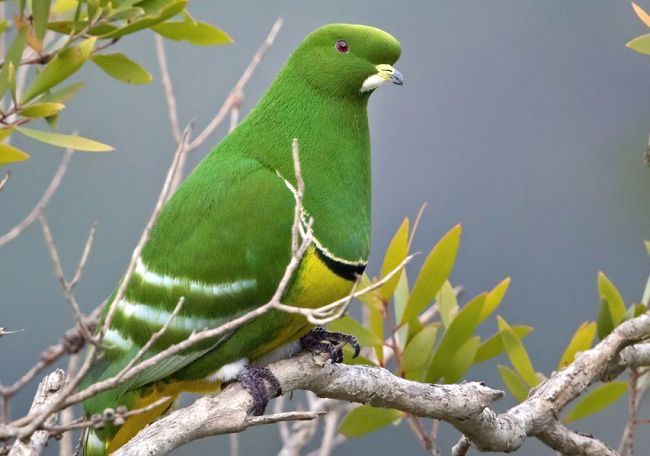
The Cloven-feathered Dove (Drepanoptila holosericea) is one of the most extraordinary doves in the world — and it exists nowhere else but New Caledonia, a remote island in the South Pacific. At first glance, it appears to shimmer like metal, with silky gray plumage washed in green, blue, and bronze, and a glowing yellow patch on its face. But its most remarkable feature lies in its name: the barbules of its feathers are split, or “cloven,” giving them a unique, velvety texture unlike any other bird.
A canopy-dwelling species, the Cloven-feathered Dove spends most of its life high among humid rainforest treetops, feeding on figs, drupes, and berries. Its diet plays a vital ecological role — the bird is an important seed disperser for many native trees, helping maintain the island’s fragile ecosystem.


Little is known about its breeding behavior, as it nests in secluded spots and rarely descends to the forest floor. When seen in sunlight, it glows like brushed metal; when hidden in shade, it seems to vanish completely — a master of camouflage and reflection.
Though still present across parts of New Caledonia, this dove is vulnerable to habitat loss and introduced predators such as rats and cats. Conservationists consider it a key species for preserving the island’s biodiversity.
With its strange feather structure, restricted range, and quiet elegance, the Cloven-feathered Dove stands as a living relic of island evolution — a reminder that even the smallest corners of the planet can hold wonders found nowhere else on Earth.