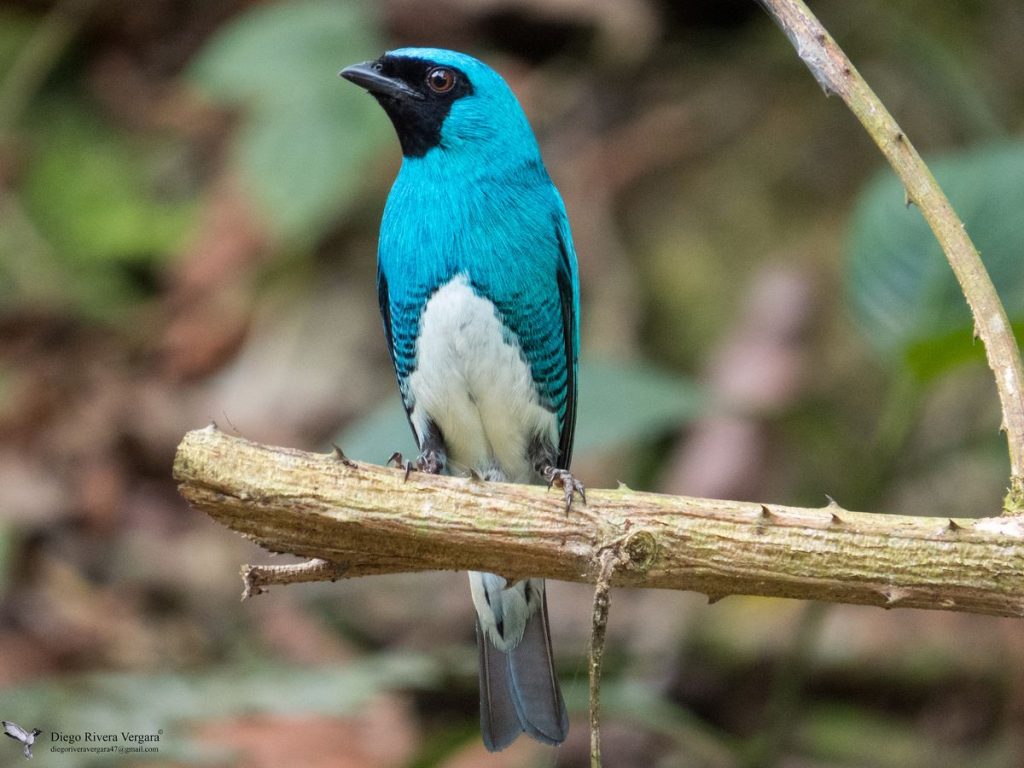

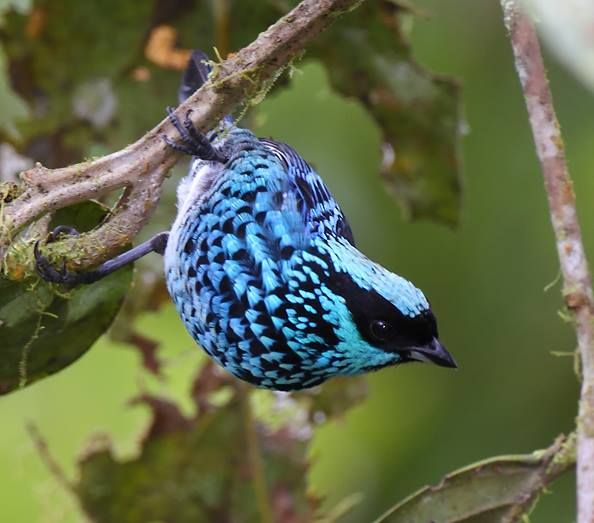
The Beryl-spangled Tanager (Tangara nigroviridis) is a small canopy-dwelling bird of the Andean cloud forests, ranging from Venezuela to Bolivia. Its shimmering blue-green plumage seems painted with gemstones — yet, no pigment creates its color. The secret lies in nanostructures within its feathers that scatter and refract light, producing hues that shift with every angle — a perfect example of structural coloration in birds.
This tanager belongs to the hyper-diverse Tangara genus, a group with over 50 species that have radiated across the Andes’ vertical habitats. Genetic studies show these color patterns evolved rapidly, possibly driven by sexual selection and habitat-specific light environments in the cloud forest canopy.


Beryl-spangled Tanagers feed mainly on fruits and arthropods, foraging in mixed-species flocks with other small birds like honeycreepers and warblers. This cooperative feeding strategy helps reduce competition and increases vigilance against predators — an example of mutualistic flocking behavior common in Neotropical forests.
They are key seed dispersers, especially for small-fruited trees of the Melastome family, passing seeds intact through their digestive tract. Their movements between canopy layers also help maintain genetic flow among plant populations across fragmented forests.
Though not considered threatened, the species depends heavily on intact montane forests. As Andean habitats shrink due to agriculture and climate shifts, the tanager’s living jewels remind us how fragile — and finely tuned — mountain biodiversity can be.