
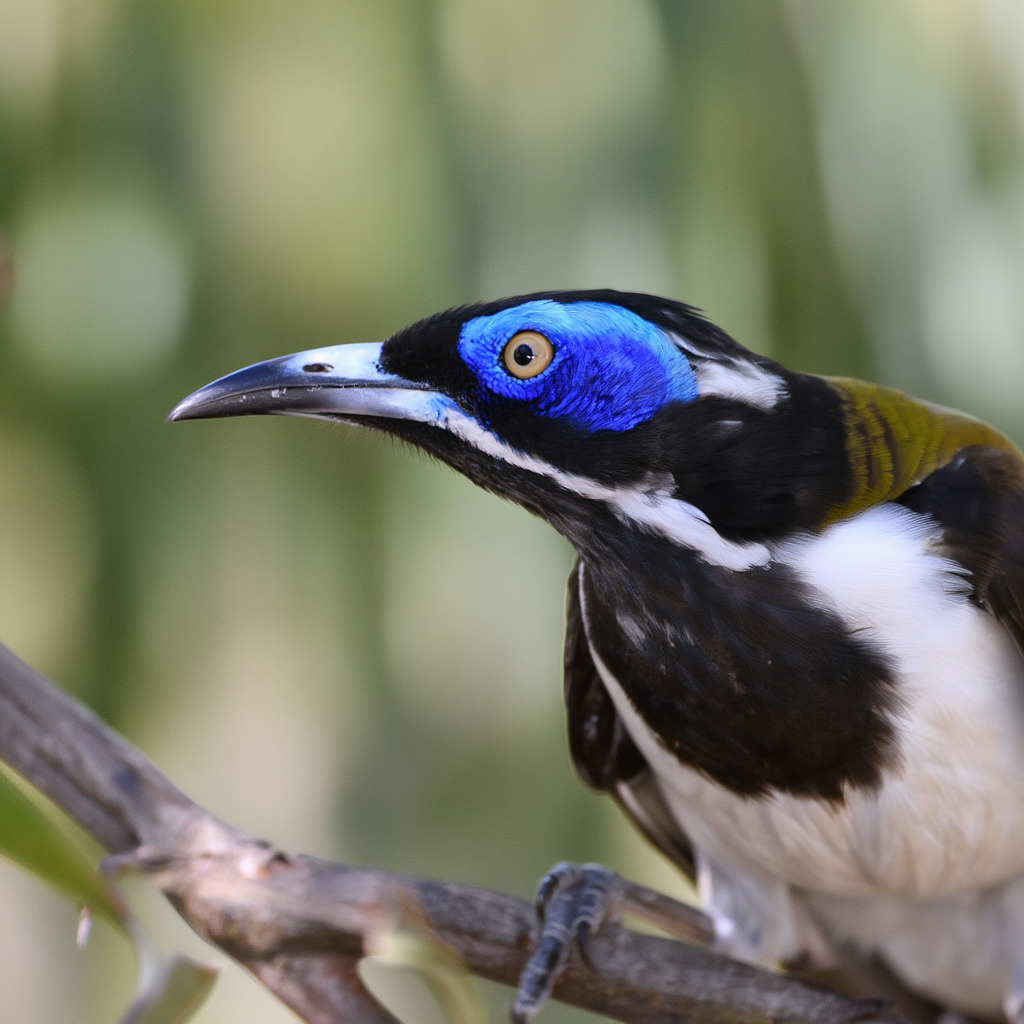
The Blue-faced Honeyeater (Entomyzon cyanotis) is a large and conspicuous member of the honeyeater family (Meliphagidae), found across northern and eastern Australia and parts of New Guinea. It’s best known for the bright blue patch of bare skin around its eyes — a feature that changes color as the bird matures.
Juveniles start with pale green facial skin, which gradually deepens into vivid cobalt blue in adults. This shift serves as a visual signal of age and dominance, helping birds recognize social hierarchy within their groups. Blue-faced Honeyeaters often live in small, noisy flocks and engage in cooperative breeding — younger birds assist their parents in raising chicks, an uncommon trait among passerines.


Despite the name, nectar makes up only part of their diet. They are omnivorous opportunists, feeding on insects, fruits, and even small vertebrates. Their flexibility allows them to thrive in both urban gardens and open woodlands, often nesting near human habitation.
Ecologically, they are important pollinators and seed dispersers, visiting flowering trees and spreading the seeds of figs and native fruits. Adaptable, intelligent, and socially complex, the Blue-faced Honeyeater is a prime example of how Australian birds blur the line between wild forest life and suburban survival.