
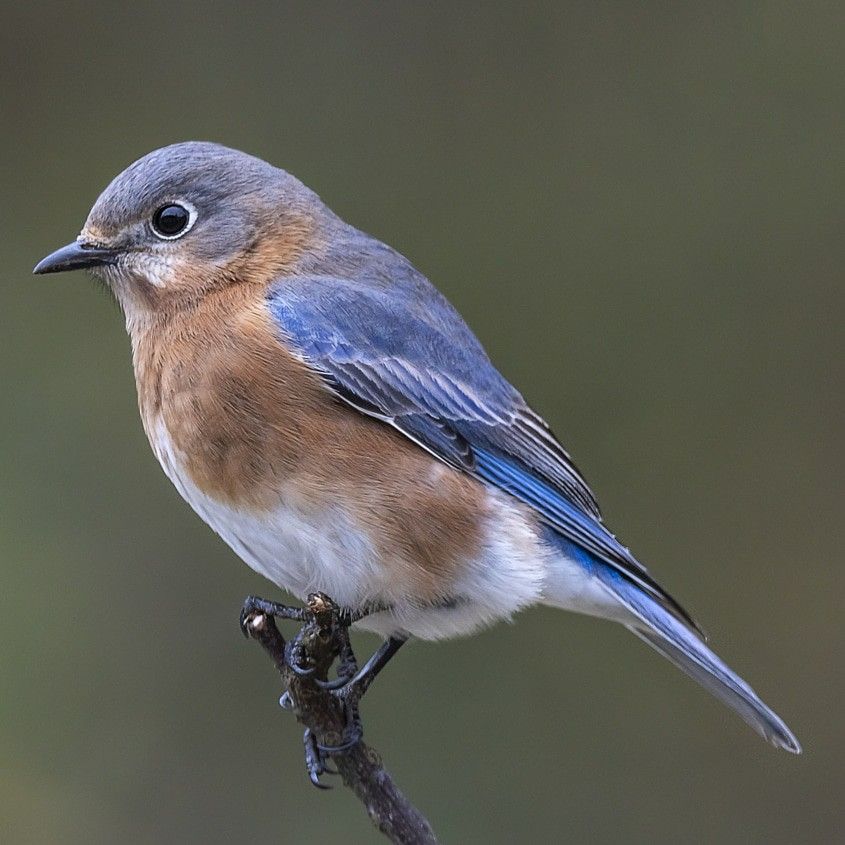
The Eastern Bluebird (Sialia sialis) is a small thrush native to North America, once a familiar sight across open fields and orchards. Males are known for their bright blue backs and reddish chests, but what makes this species remarkable is not its color — it’s its recovery.
By the mid-20th century, Eastern Bluebird populations had plummeted due to habitat loss, pesticide use, and especially competition from invasive species like European Starlings and House Sparrows, which took over their nesting cavities. In some areas, bluebirds nearly disappeared.


The turning point came in the 1970s, when conservationists launched the “Bluebird Trail” movement — installing thousands of specially designed nest boxes across North America. The effort was so successful that the Eastern Bluebird became one of the continent’s best-known examples of community-driven wildlife recovery.
Today, the species thrives again across much of its range, though it still relies on human-maintained nest boxes. Bluebirds remain important indicators of healthy, open-country ecosystems — proof that even small, localized conservation actions can reverse a steep population decline.