
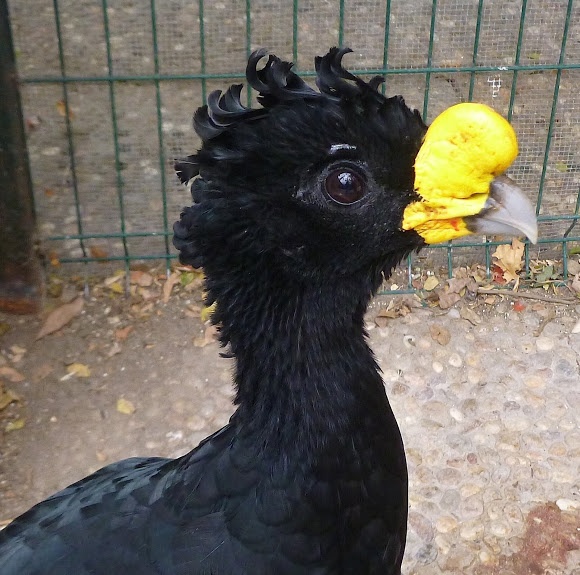
Deep within the tropical forests of Central America walks a bird that looks more like royalty than gamefowl. The Great Curassow (Crax rubra) is a striking creature—males cloaked in glossy black feathers with a crisp white belly, while females wear a mix of chestnut, barred, or even rufous plumage. But it is the head of the bird that captures attention: a bold, curling crest of feathers, like a crown fashioned by the jungle itself.


Unlike many forest birds that flit nervously through the canopy, the Great Curassow moves with calm confidence. These are large, turkey-sized birds, yet they rarely take to the air. Instead, they stride along the forest floor in small groups, foraging for fallen fruits, seeds, and the occasional insect. Their strong beaks can crush hard shells, making them vital seed dispersers that help regenerate the forest.
During courtship, males turn from dignified guardians into ardent suitors. They strut with tails fanned and wings drooped, uttering low booming calls that vibrate through the understory. A chosen mate is then led to a hidden nest—often high in the branches—where the female alone tends to the eggs and chicks.
But for all their elegance, Great Curassows are vulnerable. Once widespread from eastern Mexico down to Ecuador, their numbers have been sharply reduced by hunting and deforestation. Today, they are listed as Vulnerable, with healthy populations mainly surviving in protected reserves.


Spotting a Great Curassow in the wild feels like stepping back in time—into a rainforest where giant birds still roam the ground, regal and unhurried. They are more than birds; they are living guardians of the forest’s balance, carrying seeds, shaping the jungle, and reminding us of the wild nobility still hidden in the green depths.