
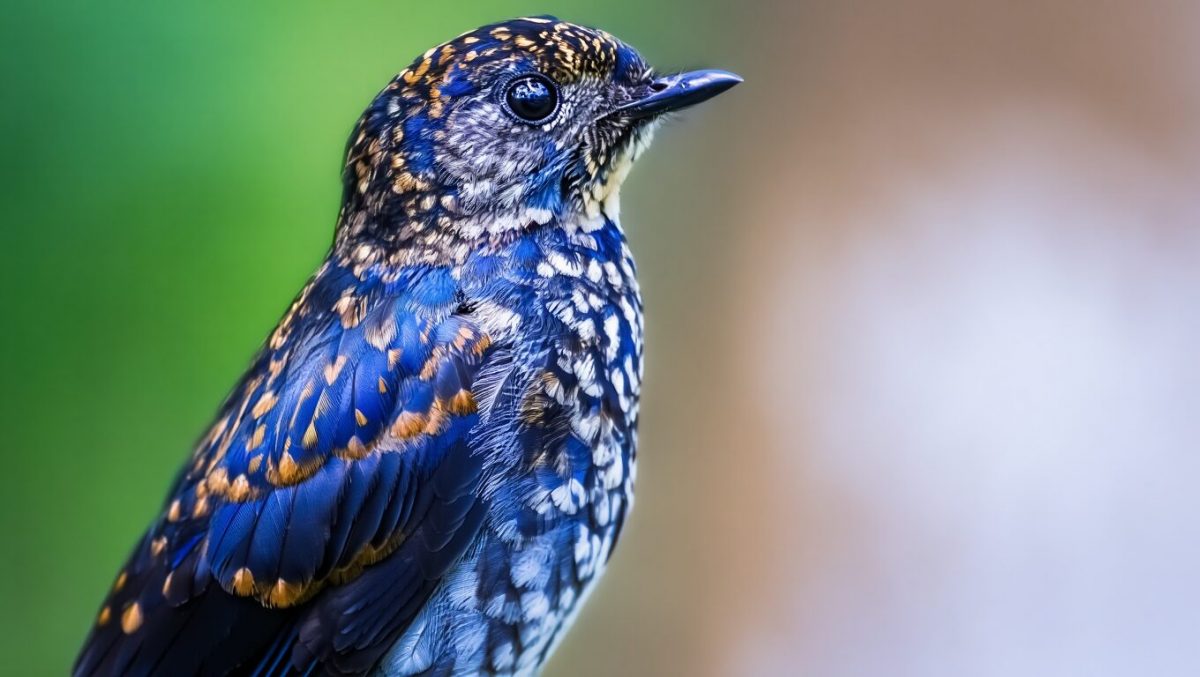
The Nilgiri Flycatcher (Eumyias albicaudatus) is a small, sapphire-blue songbird found only in the montane forests of southern India’s Western Ghats, particularly in the Nilgiri and Palni Hills. As an endemic species, it exists nowhere else on Earth, making it a symbol of the region’s fragile biodiversity.
Males shimmer in deep indigo-blue with a white tail tip, while females are a soft grayish-blue — both perfectly adapted to the cool, misty forests they inhabit. Unlike many flycatchers that hunt in open spaces, the Nilgiri Flycatcher prefers the shadowy understory, darting swiftly from branch to branch to catch insects in midair.


Its call is a sweet, whistling song that blends with the forest’s hush — one of the few clues to its presence. During the breeding season, it builds cup-shaped nests in tree holes or rock crevices, often hidden by moss and ferns.
The species plays an important ecological role by controlling insect populations and thriving only in undisturbed, high-altitude habitats. Sadly, deforestation and tourism development are shrinking its range.
To glimpse a Nilgiri Flycatcher is to catch a flicker of living blue mist — a rare reminder of how the Western Ghats’ quiet beauty depends on the survival of its most delicate inhabitants.