
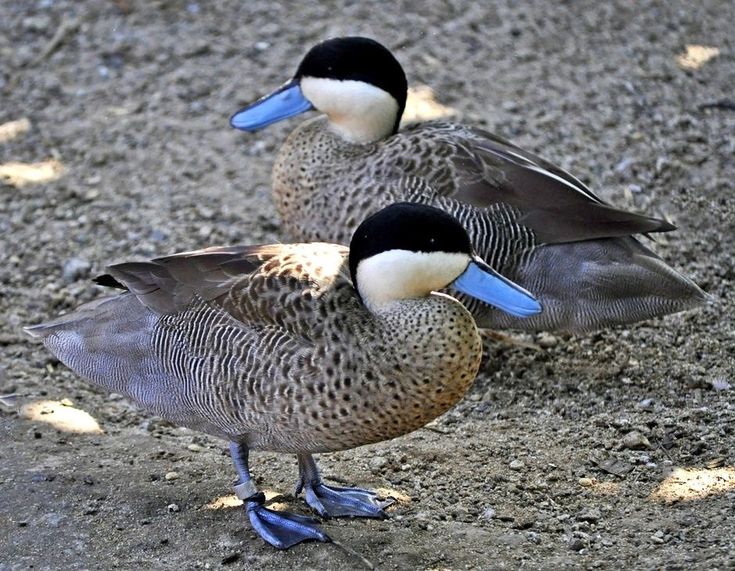
The Puna Teal (Spatula puna) is a graceful duck that lives where few birds dare — on the high Andean lakes and marshes of South America, from Peru and Bolivia to northern Chile and Argentina. At altitudes above 3,000 meters (nearly 10,000 feet), it thrives in thin air and cold winds, perfectly adapted to life among the clouds.
Elegant and soft-colored, the Puna Teal is easily recognized by its pale gray body, mottled chest, black cap, and striking sky-blue bill. Males and females look alike, both sharing that delicate pastel palette that mirrors the misty lakes they call home.


Unlike many ducks that dive, the Puna Teal is a dabbling feeder — it skims the surface for aquatic plants, seeds, and tiny invertebrates. Its long, slender bill is lined with fine lamellae that filter food from the water, an efficient adaptation to its nutrient-poor habitat.
Pairs are typically monogamous and strongly bonded, nesting in reeds or on sheltered lake islands. The female lays 6–8 creamy eggs, and both parents guard the ducklings fiercely, leading them across icy waters just hours after hatching.
Though widespread, the Puna Teal’s survival depends on the health of high-altitude wetlands, which are increasingly threatened by water extraction, mining, and climate change.
Calm, beautiful, and resilient, the Puna Teal is a symbol of life at the edge of extremes — a bird that glides serenely through some of the highest and harshest landscapes on Earth, painting soft blue ripples across the silver lakes of the Andes.