
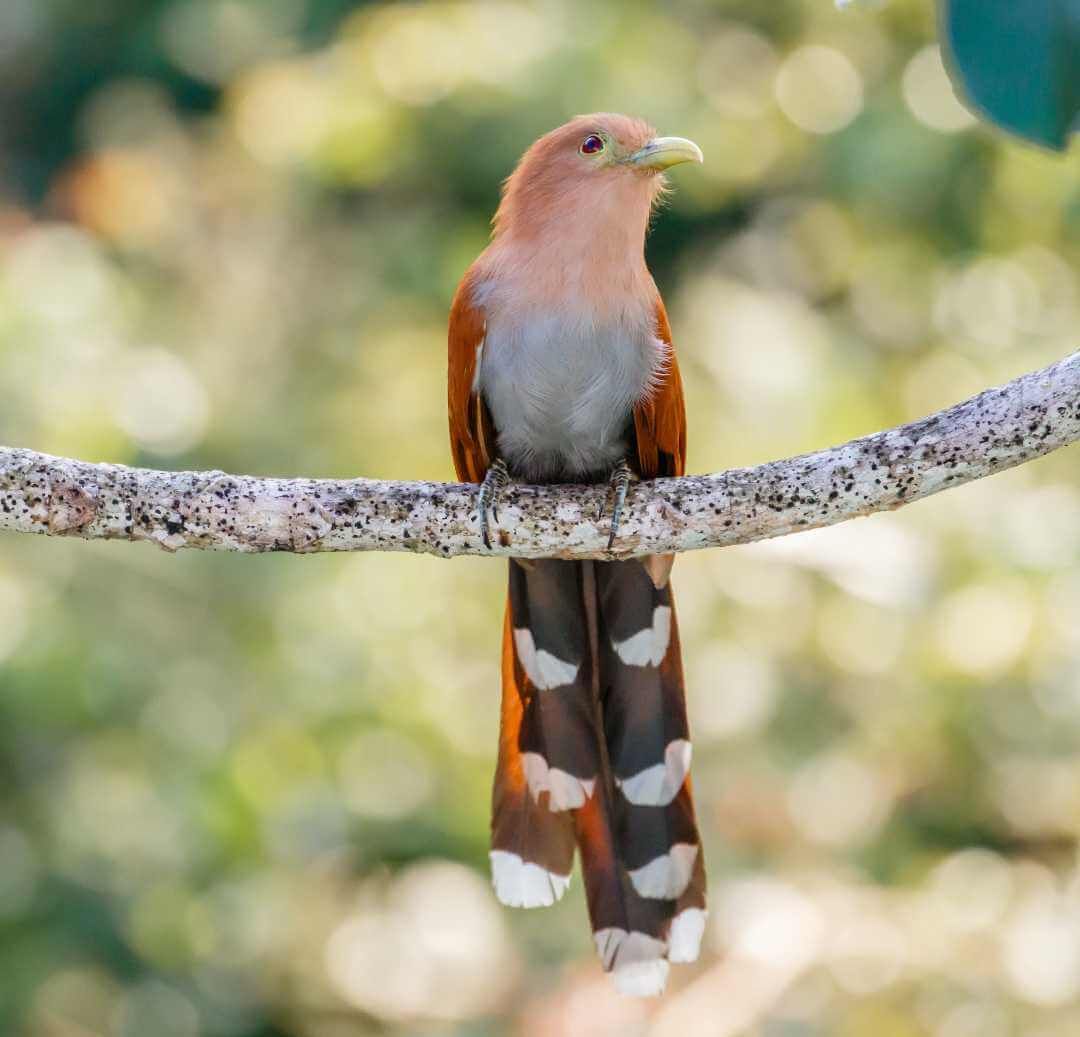
Stretching nearly half a meter long, the Squirrel Cuckoo (Piaya cayana) is one of the most striking cuckoos of the Americas. Its chestnut body, long graduated tail tipped in bold white, and lively movements make it a standout in tropical forests from Mexico to Argentina.


This bird earns its name from the way it bounds and leaps through trees like a squirrel, chasing insects and small vertebrates with surprising agility. It often clambers along branches instead of flying directly, using its long tail for balance like an acrobat.
Unlike many cuckoos, the Squirrel Cuckoo is not a brood parasite — it raises its own chicks in a nest built of twigs and leaves. Its diet is broad: large insects such as grasshoppers, cicadas, and caterpillars, as well as small lizards. In fact, by eating hairy caterpillars that other birds avoid, it helps regulate forest insect populations.
The species is highly adaptable, thriving in diverse habitats from humid rainforests to open woodlands and even gardens. Its loud, repetitive call carries through the canopy, a familiar sound to those living in its wide range.


With its elegant tail, squirrel-like antics, and vital role in forest ecology, the Squirrel Cuckoo is both a performer and a caretaker of the tropical treetops.