
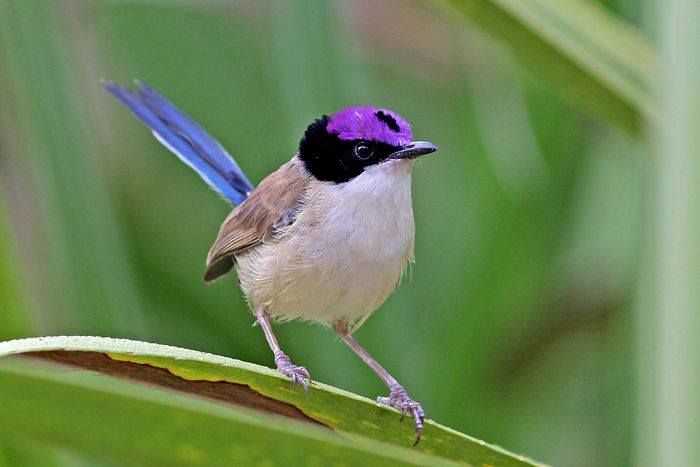
In the dense riverbanks and pandanus thickets of northern Australia lives a bird so small it could sit in your palm, yet so radiant it seems touched by royalty—the Purple-crowned Fairy-wren (Malurus coronatus).


The male, during breeding season, wears a crown of deep violet feathers that gleam like amethyst under the sun. This jewel-like cap is framed by soft black lines, giving him the appearance of a tiny monarch hidden in the reeds. Females, by contrast, are more modest in appearance—soft brown and gray—but no less important to the life of the colony.
Like their relatives, these fairy-wrens are social to their core. They live in cooperative groups where older offspring help their parents raise new chicks, a rare form of teamwork in the bird world. At dawn, their sweet trills echo through the riverside vegetation, signaling territory, companionship, and courtship.
What makes the Purple-crowned Fairy-wren remarkable is its loyalty—not just to its group, but to its home. It relies heavily on healthy, dense vegetation along waterways, where it hides from predators and raises its young. Unfortunately, this dependence makes the species vulnerable. As grazing cattle and invasive plants damage riparian habitats, these tiny birds lose the cover they need to survive. Conservation programs now focus on restoring riverbanks to ensure the fairy-wren’s survival.


Watching them flit through the undergrowth is like catching glimpses of living jewels darting among the leaves—fragile, dazzling, and utterly unique to Australia’s northern wilderness.