
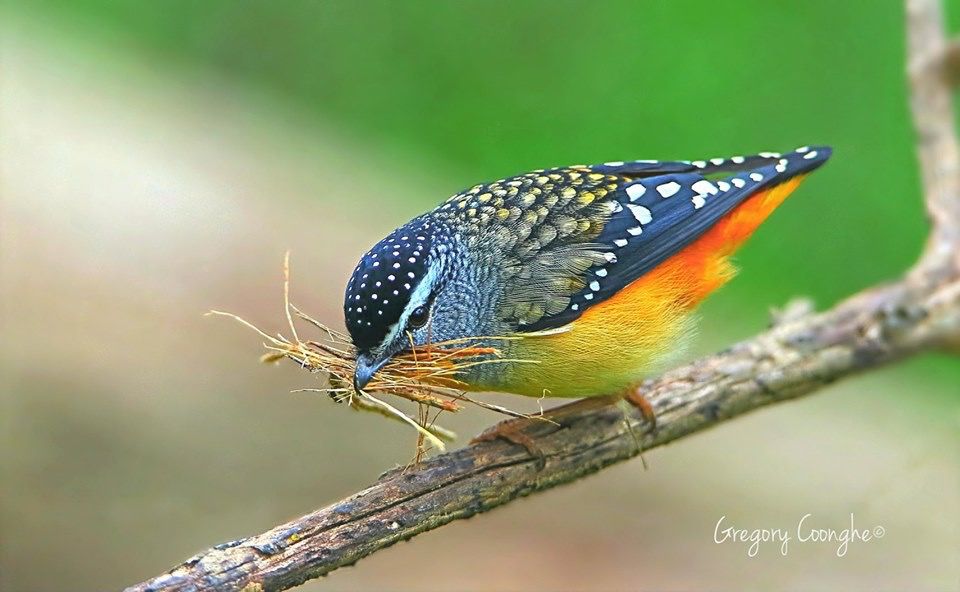
Hidden high in the eucalyptus canopy, a tiny flicker of color moves like a living gem—the Spotted Pardalote (Pardalotus punctatus). Barely the size of a thumb, this bird is one of Australia’s most dazzling yet least seen treasures.


Its plumage seems stitched from sunlight and starlight—black wings freckled with bright white spots, a golden throat that glows like dawn, and a crown tinged with silvery blue. At first glance, it looks too delicate for the harsh Australian bush, but the pardalote is tougher than it appears.
Despite their jewel-like appearance, spotted pardalotes live a surprisingly grounded life. While they forage among eucalyptus leaves for tiny insects and sweet lerp sugar, they build their nests not in trees but underground. Using their sharp little bills and feet, they tunnel into creek banks or soft earth, carving out burrows that can run more than a meter long. At the end of these passageways, they fashion a soft chamber of grass and bark, where the female lays her clutch of eggs.
For such a small bird, their voice is remarkably clear. A series of soft, rising notes—“dee-dee”—rings through the treetops, often the only way to detect them among the foliage. Birdwatchers prize the moment when sound gives way to sight, catching a fleeting sparkle of spots against the green canopy.


Though widespread, their secretive nesting habits and tiny size mean most people never notice them at all. But for those who pause and listen, the spotted pardalote is a reminder of the hidden wonders tucked into even the most ordinary-looking stands of gum trees—bright sparks of life, no larger than a leaf, that carry the forest’s rhythms in their wings.