
In the sunlit scrublands of Australia, a sudden flash of blue can stop even the most distracted wanderer in their tracks. It is not a jewel, not a trick of the light, but the Splendid Fairy-wren (Malurus splendens)—a bird so dazzling it seems plucked from a painter’s dream.


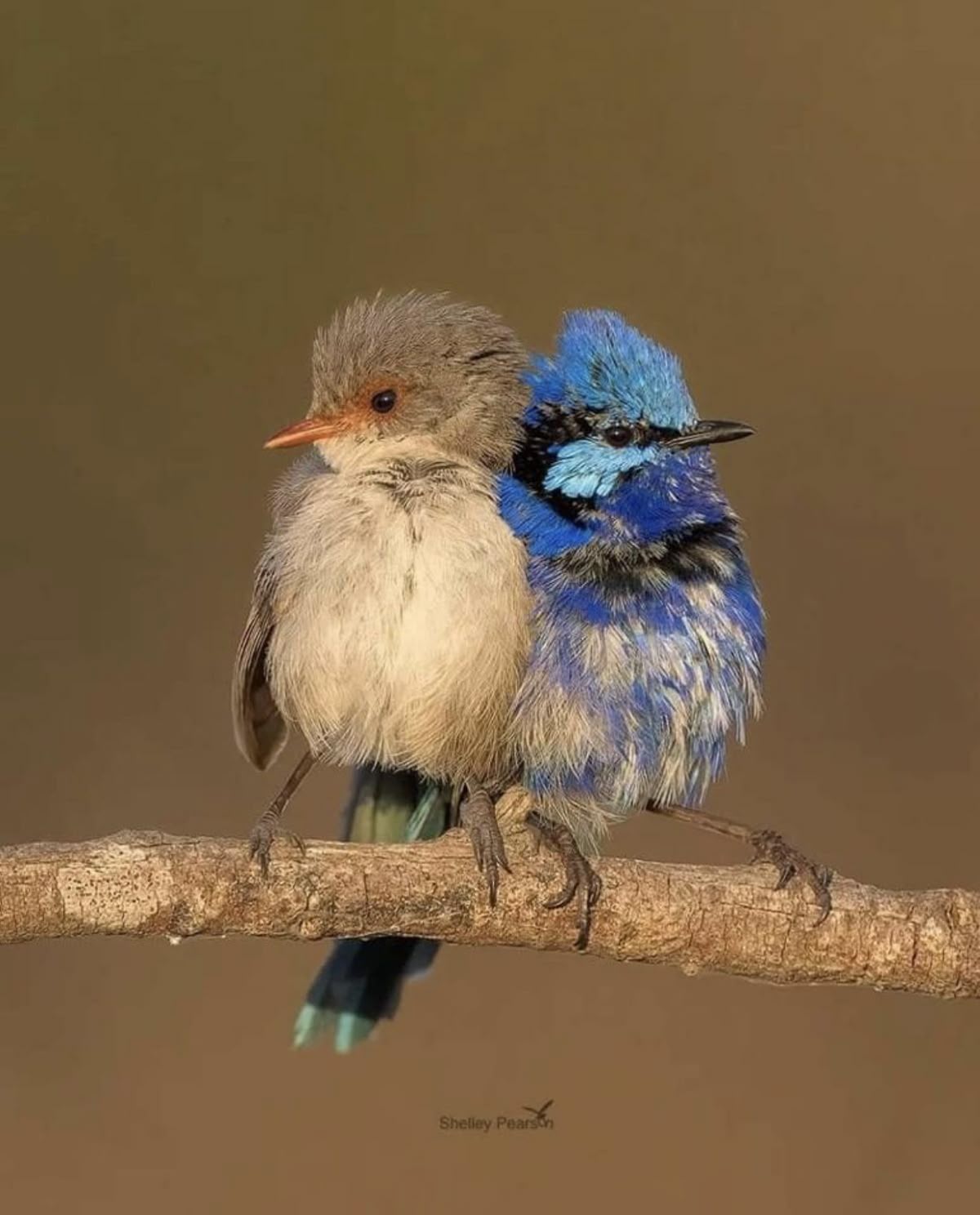
Males in full breeding plumage shimmer in electric shades of cobalt and turquoise, their feathers glowing like shards of sky. They dart through the undergrowth with boundless energy, carrying twigs, insects, or the occasional flower petal in their beaks. Females and non-breeding males, cloaked in soft browns and grays, are far less conspicuous—perfect camouflage against predators—but it is the radiant male that often steals the spotlight.
What makes these wrens even more remarkable is their complex social life. They live in cooperative family groups, where several birds help raise the young. Loyalty, however, is not their strong suit: females are known to discreetly pair with males outside their group, often selecting the brightest, bluest partners. Scientists believe the intensity of a male’s plumage signals his health, making his glowing feathers a beacon of genetic fitness.
Despite their tiny size—barely 14 centimeters long—Splendid Fairy-wrens brim with charisma. They sing, chatter, and hop energetically through the low shrubs, constantly in motion, rarely still. Their brilliance is not just in their color but in their adaptability: from arid desert edges to suburban gardens, they’ve found ways to thrive alongside people.


To glimpse a Splendid Fairy-wren is to see sunlight made flesh—a fleeting spark of sapphire against the green, a reminder that nature often saves its boldest colors for the smallest creatures.