

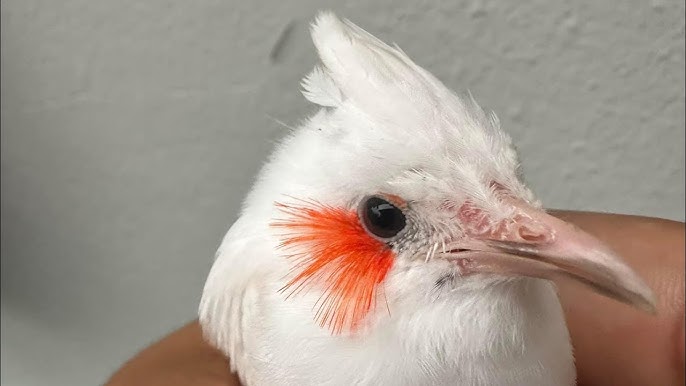
In the forests of Southeast Asia, a flash of white feathers sometimes appears where it shouldn’t exist at all. The rare White-Crested Bulbul isn’t a separate species—it’s the result of a genetic mutation that strips away its usual earth-toned camouflage and replaces it with a brilliant snowy crest and pale plumage.
But what looks enchanting to human eyes is a dangerous disadvantage in the wild. Birds depend on blending in to hunt quietly and avoid predators. A bulbul that shines white among the trees is far more visible, making it harder to forage for food and easier for raptors to spot. That is why these pale individuals are incredibly scarce—nature rarely allows such brilliance to survive.
Yet rarity fuels demand. In Southeast Asia’s notorious black markets, a White-Crested Bulbul with this unusual coloration can fetch an exorbitant price. Traders prize them as living trophies, symbols of rarity and status, while conservationists see them as victims of both chance and human greed.


To glimpse one in the wild is extraordinary, almost like spotting a living ghost of the forest. But behind its beauty lies a fragile truth: mutations may create wonders, yet those very wonders often struggle to endure.