
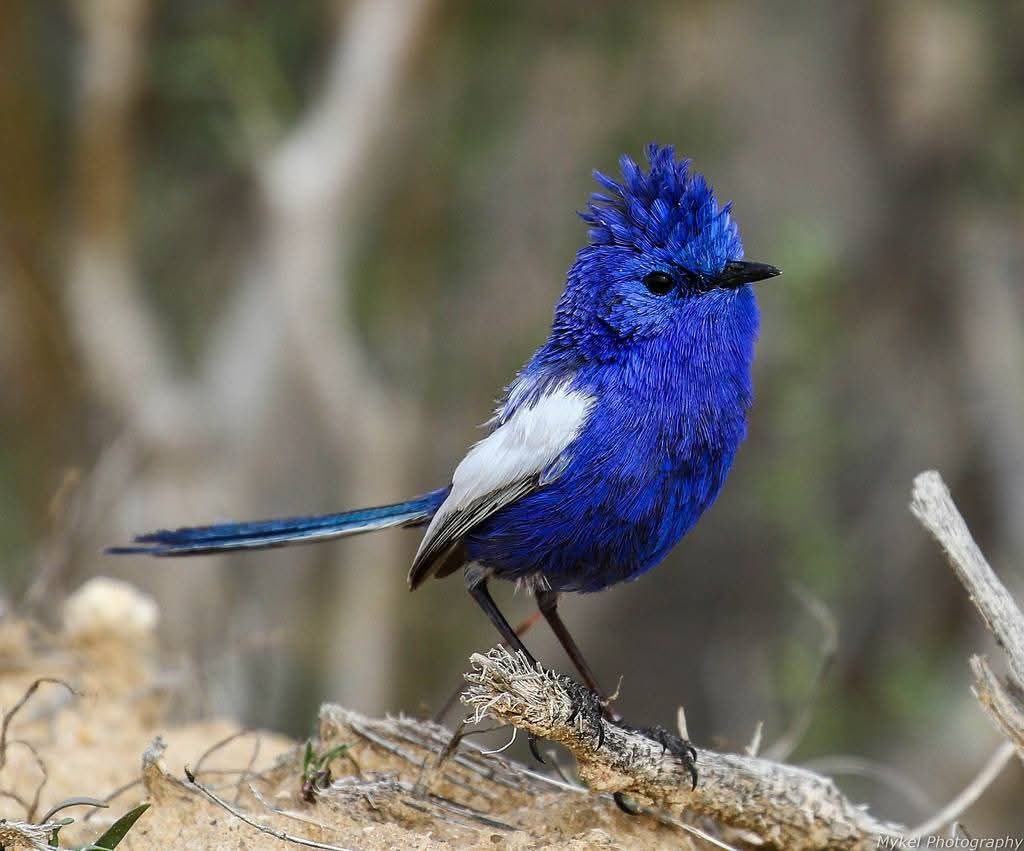
The White-winged Fairywren (Malurus leucopterus) is one of Australia’s most striking small songbirds, found across the country’s dry inland regions. During most of the year, males are a modest brown like the females, blending easily into the arid scrub. But when breeding season arrives, they undergo a spectacular transformation — their plumage turns brilliant metallic blue, offset by bright white wings, glowing vividly against the red desert sand.
This color shift is triggered by rising hormone levels and serves as a signal to females of health and vitality. Interestingly, not all males turn blue; in some populations, they stay brown year-round — a rare example of geographic variation in plumage strategies.


White-winged Fairywrens live in small social groups, flitting low through spinifex and saltbush as they search for insects and seeds. They are also known for their complex cooperative breeding, where several birds help raise the offspring of a dominant pair — a behavior thought to strengthen group survival in harsh environments.
Despite their delicate appearance, these wrens are resilient desert survivors. Their brilliant breeding colors may last only a few months each year, but for that brief time, they shine like tiny jewels scattered across Australia’s sunlit plains.