
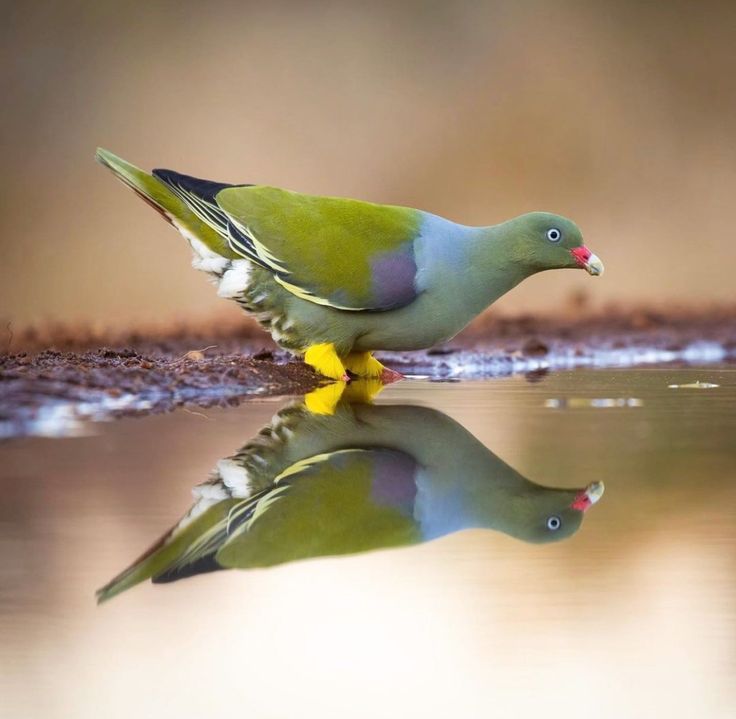
The Yellow-footed Green Pigeon (Treron phoenicoptera), affectionately known in India as the “Hariyal,” is a serene and social fruit dove that fills warm forests and city parks with quiet charm. Its plumage is a soothing blend of olive-green, soft gray, and lilac, perfectly matching the foliage it loves to vanish into. But what gives it its name — and a touch of brightness — are its vivid yellow legs and feet, glowing like sunlight beneath the canopy.
Common across the Indian subcontinent, this pigeon prefers banyan, peepal, and fig trees where it feeds gracefully on ripe fruits. Unlike the ground-foraging city pigeons, the Yellow-footed Green Pigeon rarely descends to earth, spending most of its life high in the treetops.


Its flight is fast and strong, with short bursts of whirring wingbeats, and its voice is a soft, rhythmic “coo-coo-coo,” often heard at dawn when flocks gather to feed. During courtship, males bow and puff their chests in gentle displays, showing flashes of purple and bronze under sunlight.
Beyond its beauty, this bird plays a vital ecological role as a seed disperser, helping sustain the very forests it depends on. In many cultures, the Hariyal symbolizes peace and abundance, a fitting emblem for a creature so calm and quietly essential.
In the noisy modern world, the Yellow-footed Green Pigeon remains a gentle reminder that nature’s grace often moves in silence — among leaves, light, and fruit