
In the remote wetlands of central and eastern Africa, where papyrus reeds rise higher than a person’s head and crocodiles glide silently through the water, a truly bizarre bird rules the marsh—the Shoebill Stork (Balaeniceps rex). And while the adults are already icons of prehistoric majesty, their chicks are perhaps even more fascinating to behold.


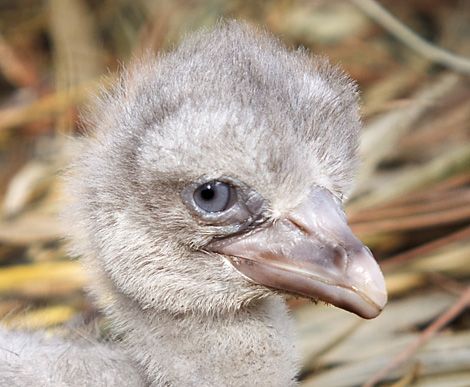
When a Shoebill chick first hatches, it looks almost comical: a fluffy, grayish-white body topped with an oversized bill that seems far too large for its head. This bill, though awkward in the early weeks, is the very tool that will one day allow it to capture lungfish, catfish, and even baby turtles with astonishing precision.
Shoebill parents are highly attentive but selective. Typically, two eggs are laid, but in most cases, only one chick survives to adulthood. The larger chick often outcompetes its sibling for food—a harsh reality of survival in the swamp. The surviving chick, however, receives unwavering care. Parents bring mouthfuls of regurgitated fish, carefully shaded under their broad wings from the blazing sun, and even sprinkle water over the nest to keep the youngster cool.
As weeks pass, the chick’s ungainly features begin to take on a regal shape. Downy fluff is gradually replaced with gray juvenile feathers, and the enormous shoe-shaped bill grows into its full, powerful form. By the time it is three months old, the chick begins practicing wing flaps, strengthening muscles for the day it will finally rise above the swamp.


Watching a Shoebill chick is like peering into the past. Its solemn gaze and slow, deliberate movements seem almost prehistoric, as though time forgot to change this bird. Yet there is also a tenderness in its dependency on its parents, a fragile beginning for a creature that will one day tower over the reeds like a silent sentinel of the wetlands.
To witness such a chick is to glimpse the future of an ancient lineage—an awkward, fluffy heir destined to become one of the most remarkable birds on Earth.