
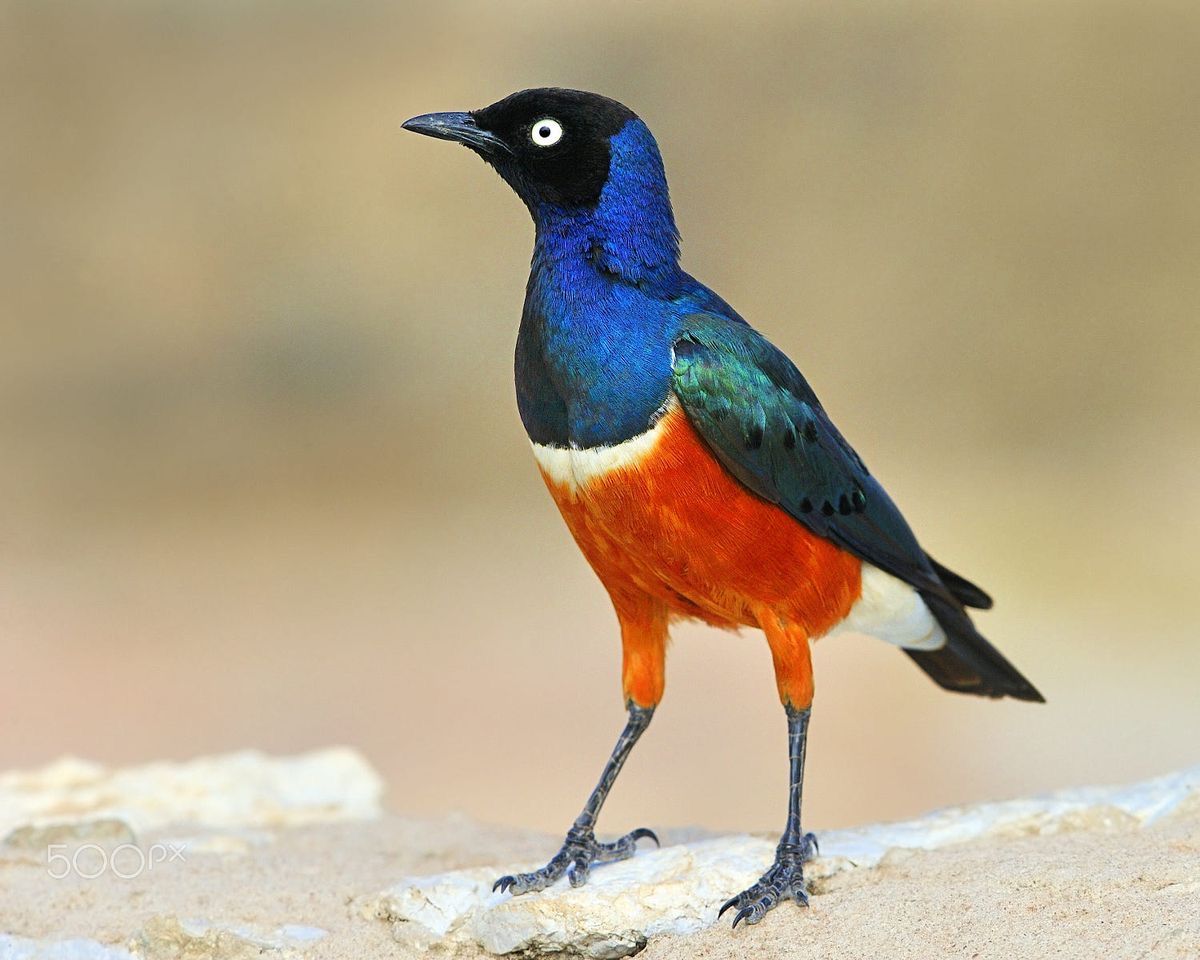
Across the sunlit savannas of East Africa, one bird glitters like a living gemstone: the Superb Starling (Lamprotornis superbus). With its dazzling plumage of metallic blue, emerald green, and fiery orange, it’s easy to see why this small bird captures the attention of birdwatchers and scientists alike.


What makes the Superb Starling remarkable isn’t just its colors—it’s its social life. Unlike many birds that raise young in pairs, these starlings are cooperative breeders. A breeding pair is often joined by several “helpers”—usually older offspring or related birds—that assist in feeding the chicks and defending the nest. This teamwork increases survival rates, especially in the harsh, predator-filled landscapes they call home.
The nest itself is a ball of grass, carefully woven and tucked into thorny bushes or acacia trees for protection. The female lays three to five pale blue eggs, and both parents, along with their helpers, take turns feeding the nestlings with insects, fruit, and seeds. Their constant soft chatter keeps the group coordinated, reinforcing the tight-knit bonds of the flock.
Outside of nesting season, Superb Starlings gather in noisy, shimmering flocks that sweep across the savanna in search of food. Their iridescent feathers catch the light at every angle, creating flashes of sapphire, turquoise, and bronze that ripple through the air like sparks of fire.


But beneath the beauty lies resilience. These birds thrive in human-altered landscapes, often foraging near villages and farms. Their adaptability, intelligence, and social cooperation have made them one of Africa’s most successful—and most admired—songbirds.
The Superb Starling lives up to its name: not just superb in color, but in character, a shining example of how cooperation ensures survival in the wild.