
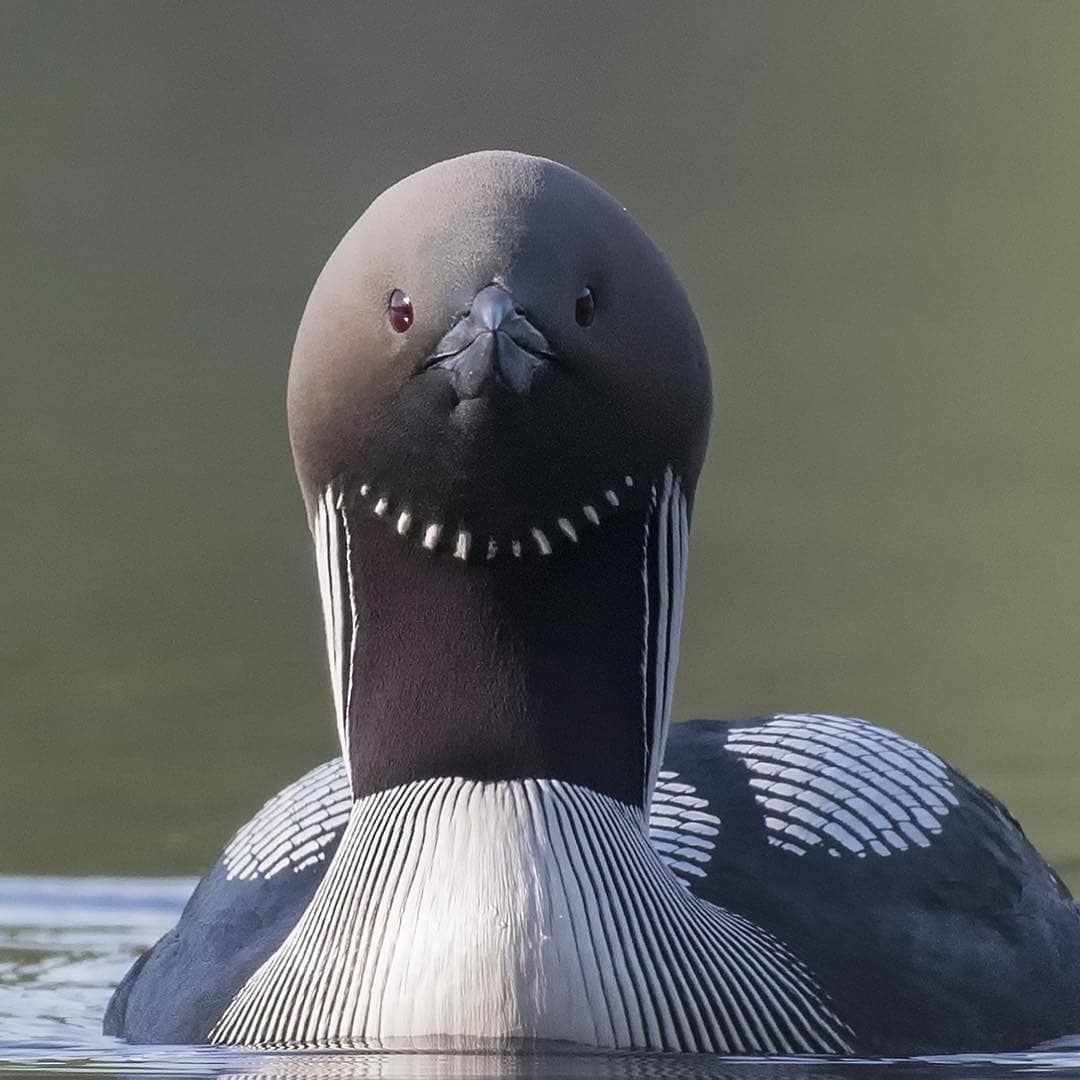
The Arctic Loon (Gavia arctica), also known as the Black-throated Diver, is a master of stillness and shadow on northern waters. With its sleek body, dagger-like bill, and striking summer plumage, it is one of the most enigmatic waterbirds of the high latitudes.


In breeding season, the bird is unmistakable: a glossy black head, a bold white-striped throat, and a checkered back that seems woven from silver and black. These patterns shimmer under the northern sun, giving the loon an almost regal appearance. Outside the breeding season, it adopts a quieter look—gray above, pale below—blending seamlessly into misty winter lakes and coastal bays.
True to its name, the Arctic Loon favors remote tundra lakes and rivers for nesting. Pairs return to the same waters year after year, building their nests right at the shoreline. Both parents take turns incubating the eggs and later feeding the chicks, diving for fish in the clear, cold water.
Unlike some of its louder relatives, the Arctic Loon’s calls are more subdued—haunting croaks and wails that ripple across the water, echoing through the stillness of northern evenings. Yet these voices serve as powerful markers of territory and pair bonds.
Come autumn, the Arctic Loon takes to the air, migrating to ice-free coasts across Europe, Asia, and parts of the Pacific. With strong, steady wingbeats, it crosses thousands of miles, trading tundra silence for winter seas.


Although still relatively widespread, the Arctic Loon faces growing threats from oil spills, pollution, fishing nets, and climate change, which alters the integrity of its freshwater breeding grounds. Protecting this species means safeguarding some of the most pristine and fragile ecosystems on Earth.
Elegant, elusive, and tied to the rhythm of northern waters, the Arctic Loon is a reminder of the quiet resilience of life in harsh places.