
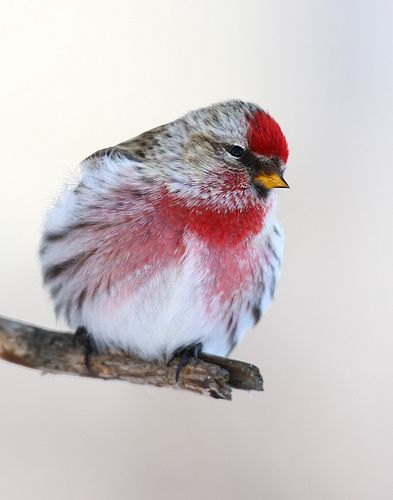
The Common Redpoll (Acanthis flammea) is a small songbird of the far north, thriving in boreal and tundra regions across Eurasia and North America. Despite weighing only about 12 grams, it survives some of the planet’s coldest winters through remarkable physiological and behavioral adaptations.
One key fact: redpolls have the ability to store food in expandable throat pouches — a feature uncommon among small passerines. They can quickly gather seeds during brief daylight hours, then retreat to shelter and eat from their cache later, reducing exposure to freezing temperatures.


They also possess dense plumage and a specialized metabolism that allows them to maintain body heat even at –50°C. At night, Common Redpolls often burrow into snowdrifts to conserve warmth — behavior more typical of larger Arctic birds.
Another fascinating trait is their nomadic, irruptive migration. Instead of migrating on a fixed route, redpoll populations wander south unpredictably in winter, following seed crops of birch and alder. In some years, they flood temperate regions in huge flocks — then vanish again the next winter.
The Common Redpoll’s ability to thrive where few small birds can makes it a symbol of cold-climate resilience — a tiny survivor in the vast Arctic landscape