
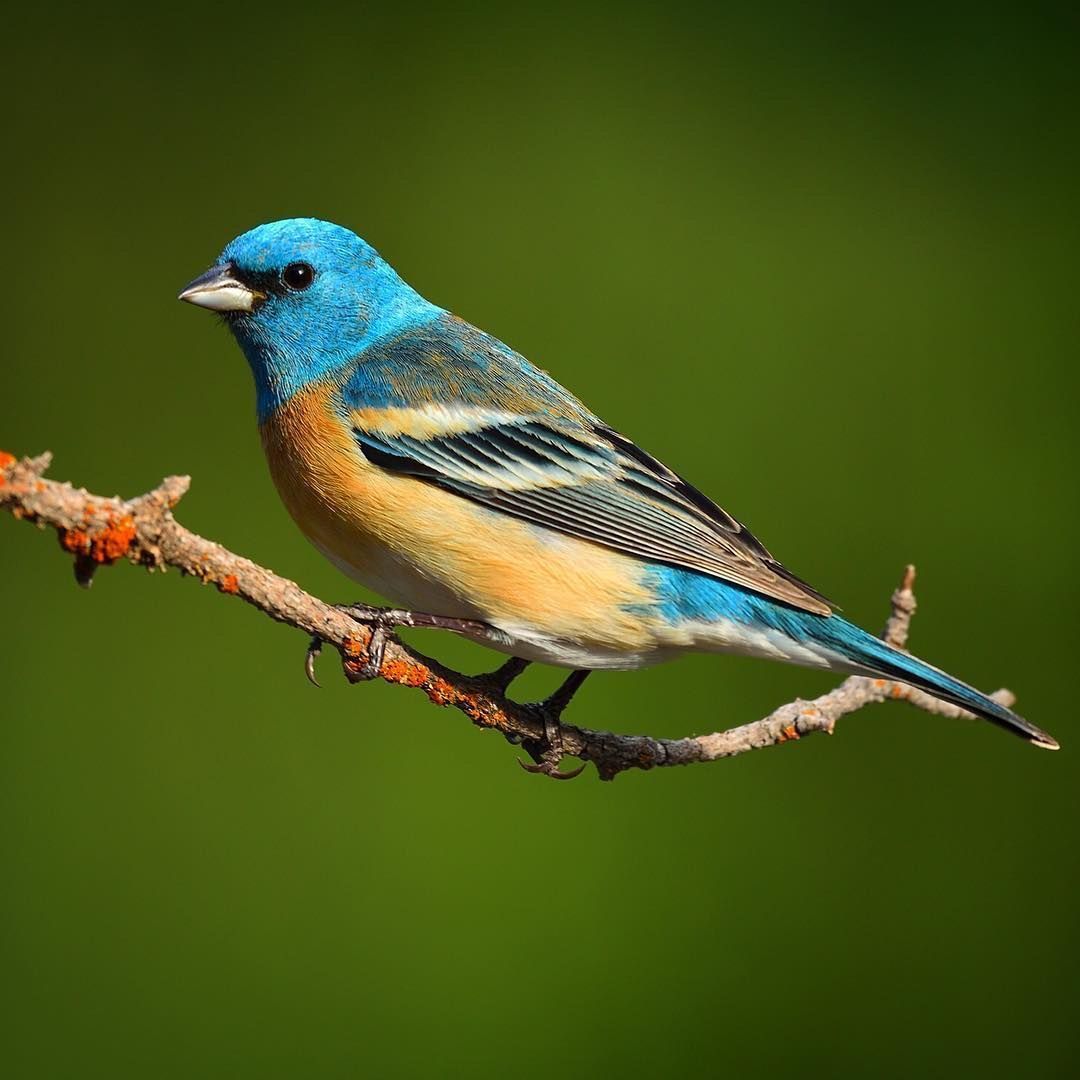
The Lazuli Bunting (Passerina amoena) is a small songbird that looks like it flew straight out of a painting. Males wear a dazzling coat of turquoise-blue on the head and back, a warm cinnamon chest, and white belly, while females are soft brown with subtle hints of blue on the wings and tail.


These buntings are found across western North America, from California and the Great Plains up to southern Canada, thriving in open woodlands, scrub, and brushy fields. Their sweet, warbling song often announces their presence long before their vivid colors are seen.
During the breeding season, males sing persistently from treetops to defend territories and attract females, sometimes engaging in spirited chases. They feed mainly on seeds, buds, and insects, shifting more toward seeds in autumn as they prepare to migrate.
In winter, Lazuli Buntings travel south to Mexico and Central America, forming mixed flocks with other finches and sparrows. Their journey across continents adds to their mystique — tiny flashes of blue linking two very different worlds.

While not currently endangered, Lazuli Buntings are vulnerable to habitat loss and pesticide use, which reduce the scrubby areas they depend on. Maintaining healthy open landscapes is key to keeping their songs alive each spring.
For birdwatchers, spotting one feels like discovering a living jewel against the greenery — a reminder that some of nature’s treasures weigh less than an ounce yet shine brighter than the sky.