
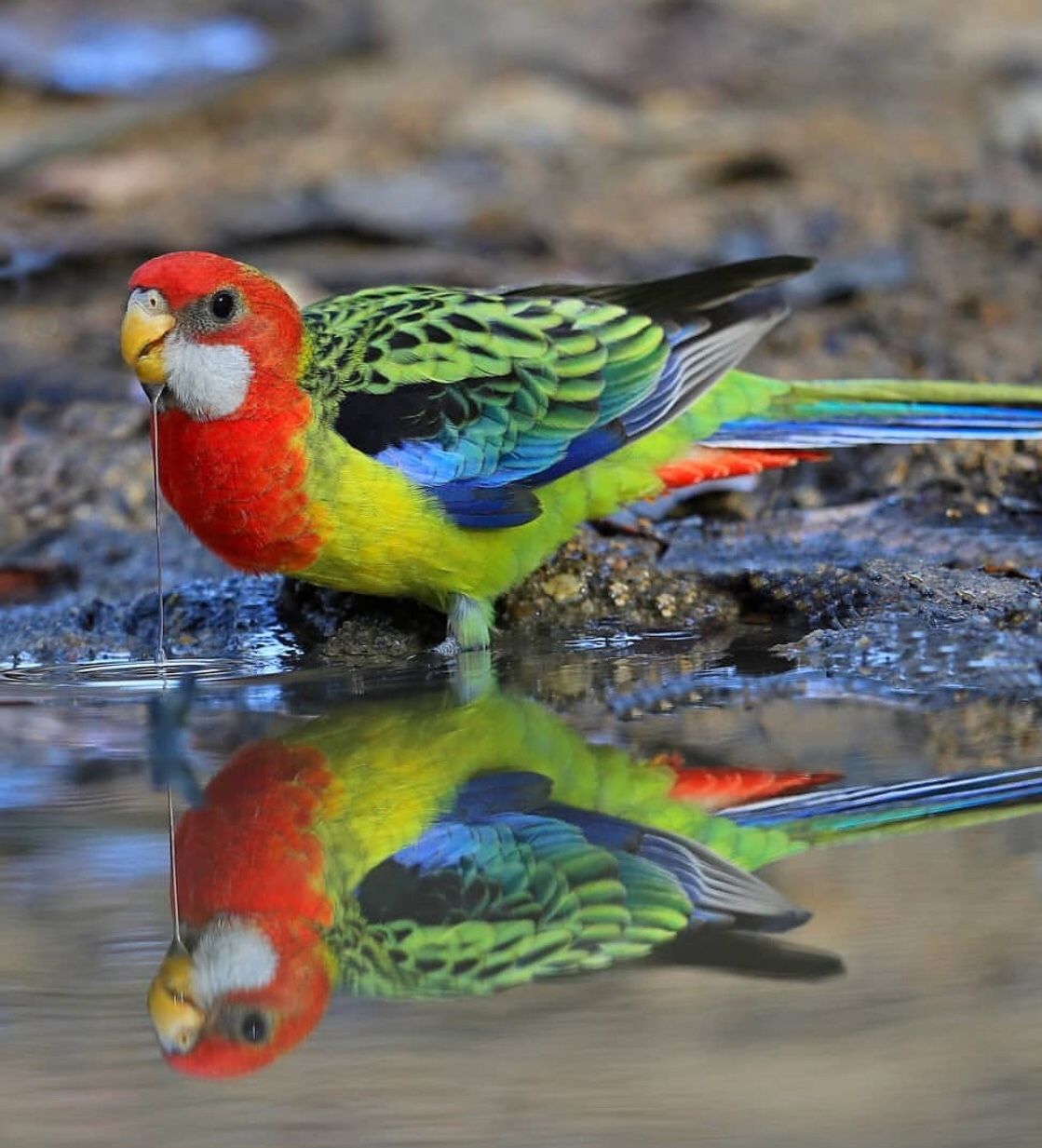
The Eastern Rosella (Platycercus eximius) is a brightly patterned parrot native to southeastern Australia and Tasmania. Beyond its vivid plumage, what truly sets it apart is its song — a melodic, whistling series of notes that sound more like a thrush or warbler than a parrot. In fact, it’s one of the few parrots known to produce true musical phrases with rhythm and variation.
This vocal ability isn’t just aesthetic. Studies suggest that complex song in rosellas evolved as a territorial signal and mate attractor in open woodland habitats, where visibility is high but sound travels far. Males with more elaborate songs often secure better nesting territories and mates.


Eastern Rosellas nest in tree hollows, usually reusing the same cavity year after year. Pairs form long-term bonds and are often seen feeding side by side on the ground, picking at grass seeds, fruits, and insects. Unlike many parrots, they’re primarily ground foragers, using their dexterous beaks to strip seed heads with surgical precision.
Their brilliant coloration — a mosaic of red, yellow, blue, and green — is the result of structural feather nanostructures rather than pigment alone, scattering light to produce saturated hues that vary subtly with angle and lighting.
Highly adaptable, Eastern Rosellas have adjusted well to human-altered landscapes and even suburban parks. Their melodic calls now echo from both eucalyptus groves and backyard gardens — a reminder that nature’s artistry can thrive even in the spaces we share.