
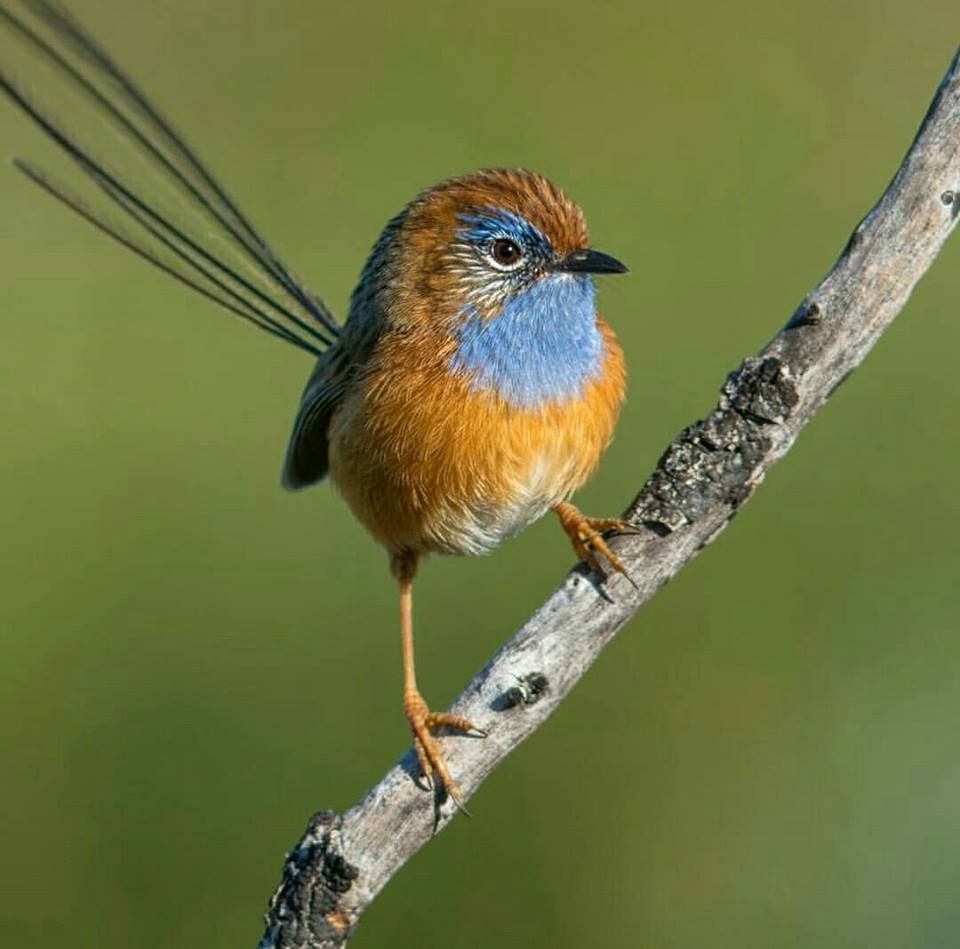
The Southern Emu-wren (Stipiturus malachurus) is one of Australia’s smallest and most elusive birds, named for its unusual, hair-like tail feathers that resemble the plumes of an emu. Each of its six tail feathers is long, wispy, and filamentous — giving the tiny bird a soft, furry appearance rather than the sleek look typical of songbirds.
Barely 6 grams in weight, the Southern Emu-wren lives hidden in dense heathlands and sedge thickets across southern Australia, rarely flying more than a few meters at a time. Instead of open flight, it moves mouse-like through vegetation, using its fine tail for balance and tactile navigation.


Unlike most wrens, it has a low body temperature and weak flight muscles, which may help it conserve energy in cool, wind-exposed habitats. These adaptations, however, make it extremely vulnerable to wildfires and habitat fragmentation — events that can wipe out entire local populations.
The male’s glittering blue throat and chest serve as breeding signals, displayed during soft, insect-like songs and courtship dances within the thick undergrowth. Both parents share nest-building and chick-rearing duties, weaving dome-shaped nests close to the ground for concealment.
Ecologically, the Southern Emu-wren plays an important role in controlling insect populations within heath ecosystems. But its dependence on undisturbed vegetation makes it a sentinel species for ecosystem health — when it disappears, it signals deeper trouble for the habitat itself.