
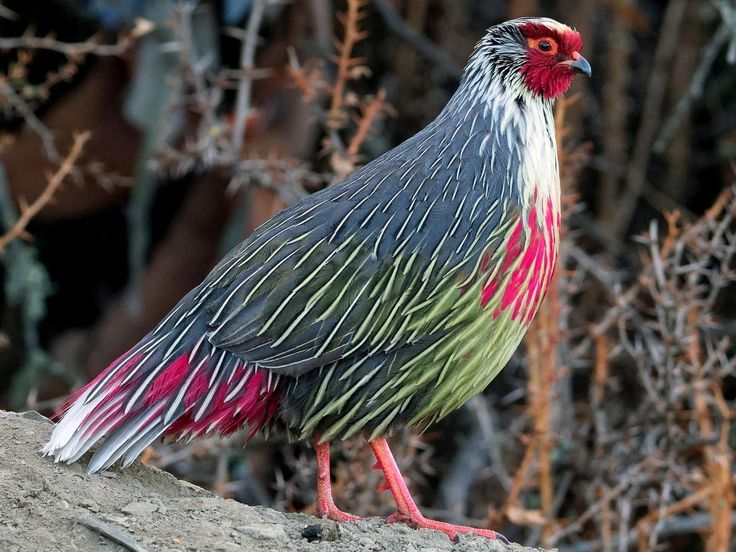
The Blood Pheasant (Ithaginis cruentus) is a hardy, high-altitude bird found in the Himalayas and mountain ranges of Tibet, Nepal, and northern India. Named for the striking crimson streaks on its breast and feathers, this bird seems as if it has been splashed with drops of red paint — a dramatic contrast against the snow and rock of its alpine home.
Living at elevations up to 4,500 meters, the Blood Pheasant thrives in cold, rugged terrain where few birds can survive. Its dense plumage — gray, olive, and red — provides both insulation and camouflage among rhododendron thickets and rocky slopes.


They travel in small flocks, foraging quietly for roots, shoots, berries, and insects beneath snow or fallen leaves. When threatened, they prefer to run swiftly uphill rather than fly, blending effortlessly into the terrain.
During the breeding season, males display to females with subtle tail-raising and feather-flaring rituals rather than loud calls. Nests are shallow scrapes hidden among roots or under shrubs, lined with moss and feathers to shield eggs from the chill.
Though not as showy as tropical pheasants, the Blood Pheasant’s beauty lies in its resilience — a symbol of endurance and quiet elegance in one of the world’s harshest environments. Its red markings are not of violence, but of survival — the living pulse of the Himalayas