
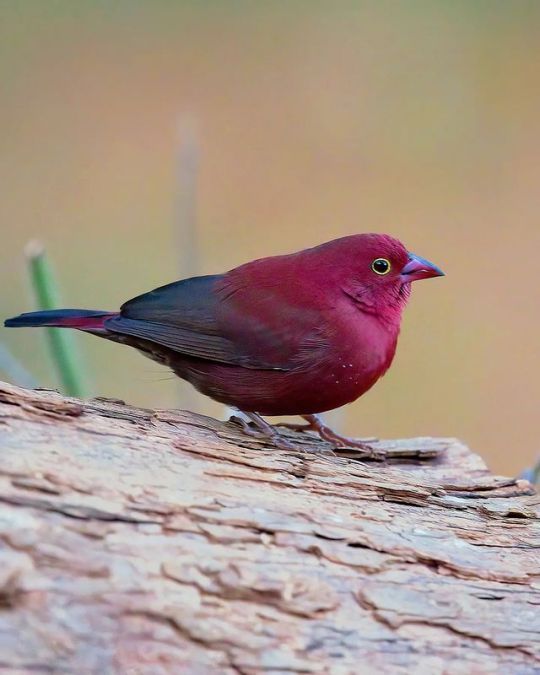
The Red-billed Firefinch (Lagonosticta senegala) is a small, graceful songbird that glows like a spark among the dry grasses of sub-Saharan Africa. Males are dressed in a warm crimson plumage, with deeper tones on the face and chest, while females wear softer shades of brown — together, they bring a quiet beauty to the continent’s open woodlands, villages, and farmlands.
Its name comes from the bird’s most striking feature — a bright scarlet bill, perfectly matched to its fiery feathers. These birds often appear in pairs or small flocks, feeding on grass seeds and tiny insects, moving lightly across the ground with a soft flutter. Their gentle “peep… peep” calls are among the most familiar background sounds in many African landscapes.


The Red-billed Firefinch is remarkably tolerant of human presence, often nesting close to houses or in thatched roofs. Its nest is a small, domed ball of grass, hidden low among shrubs or debris. However, it faces an unusual challenge: its nests are frequently parasitized by the Village Indigobird, which lays its eggs inside for the unsuspecting firefinches to raise.
Despite this, the species remains widespread and resilient. Its adaptability has allowed it to thrive in both wild and human-altered environments.
Shimmering like a tiny coal at sunset, the Red-billed Firefinch is a reminder of how even the smallest creatures can bring warmth and color to the harshest landscapes — a living spark in the heart of Africa’s savannas.