
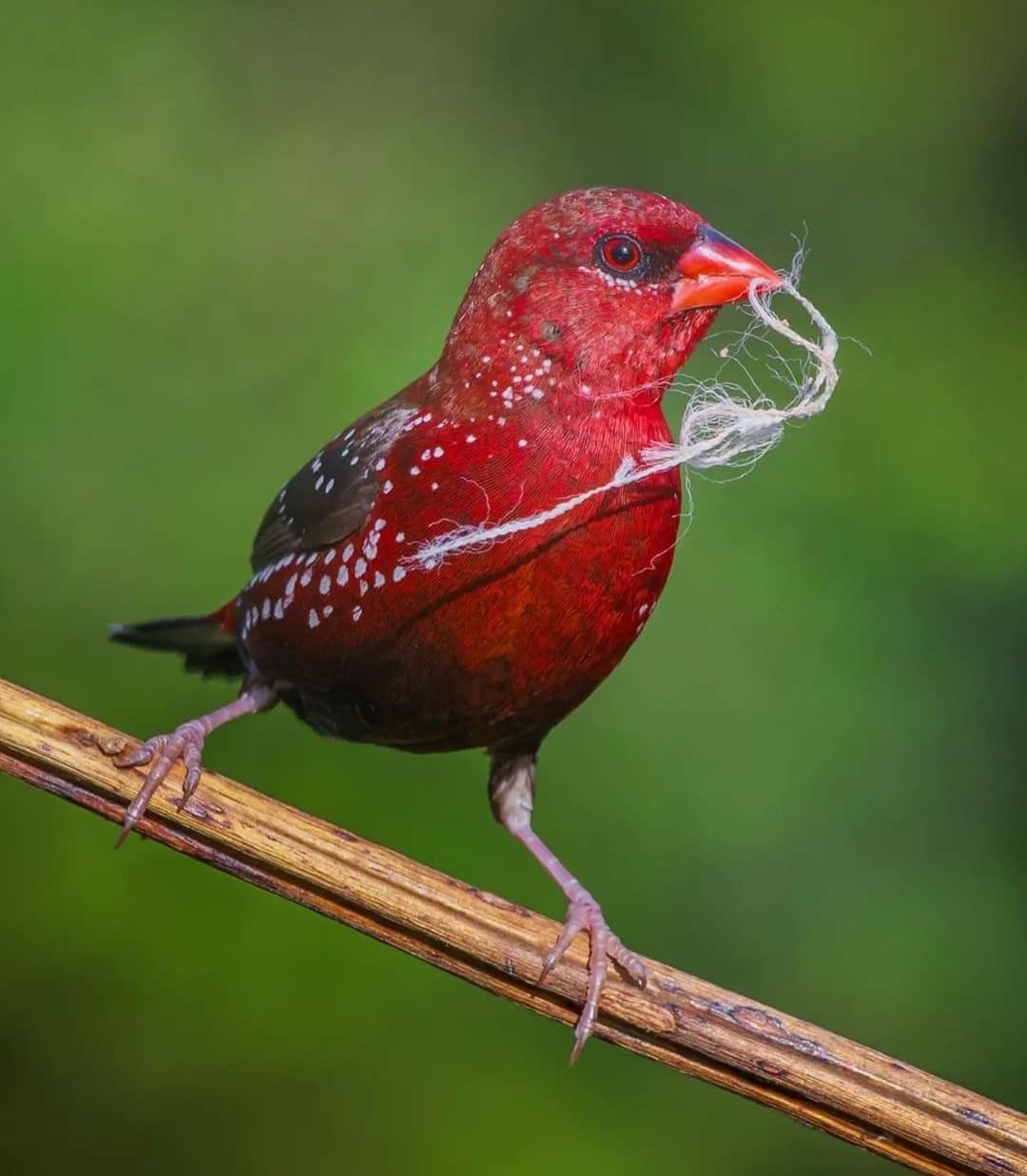
The Red Avadavat (Amandava amandava), also known as the Strawberry Finch, is a small seed-eating bird native to South and Southeast Asia. Its most fascinating trait is its seasonal color change — males transform from dull brown to bright crimson during the breeding season, then fade back afterward.
This dramatic shift is driven by hormonal cycles and diet-based carotenoid pigments. As testosterone levels rise before mating, the male’s feathers incorporate red pigments from seeds and insects, signaling fitness and attracting females. When the breeding season ends, new feathers grow in brown again — a natural camouflage against predators.


Red Avadavats are social and nomadic, often forming flocks of dozens that move with rainfall and grass growth. They feed mainly on grass seeds but switch to insects when raising chicks to supply protein. Nests are dome-shaped and hidden in tall grasses, where both parents share incubation and care.
Interestingly, the species has spread far beyond its native range — established feral populations now live in Africa, the Pacific islands, and even parts of Europe, a testament to its adaptability. Despite their tiny size (just 9–10 cm long), they are remarkably resilient to habitat changes and human disturbance.
The Red Avadavat’s color is more than beauty — it’s a biological signal of vitality, cycling with the rhythm of seasons and hormones. In the world of small birds, few species wear their love life so literally on their feathers.