
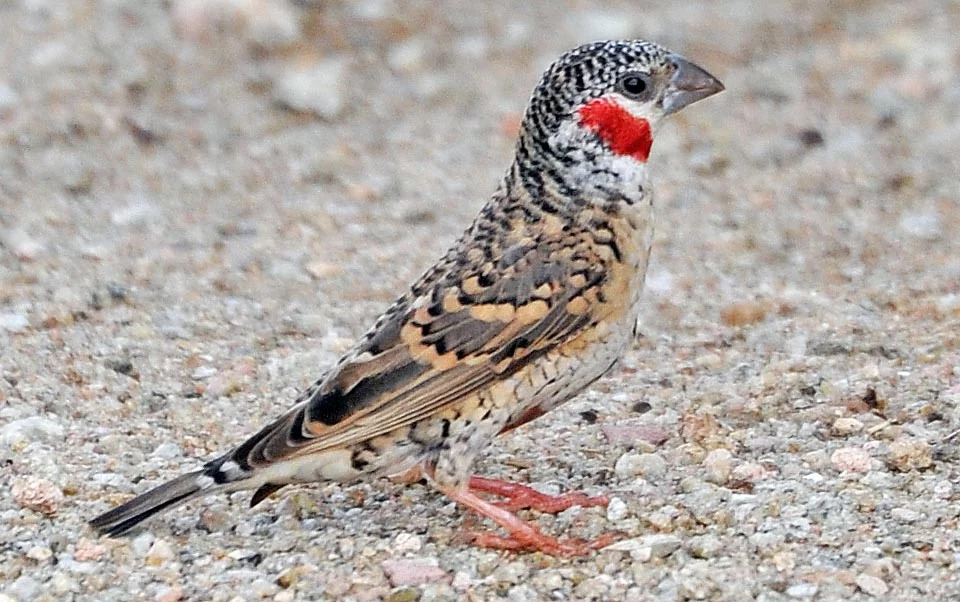
The Cut-throat Finch (Amadina fasciata) is a small African estrildid finch found across dry savannas from Senegal to Ethiopia and south to Tanzania. Its striking red band across the throat of males gives the species its unsettling name — yet in behavior, it’s usually gentle and social.
This species lives in large mixed flocks and often nests near other birds such as weavers or sparrows. The red “cut-throat” mark isn’t a wound, but a sexual signal, used by males to attract mates and assert dominance. Females, lacking the red slash, rely more on song and courtship displays during pairing.


Cut-throat Finches are seed specialists, feeding mainly on grass seeds and millet, but they also eat insects during breeding season to feed chicks. Remarkably, they can survive long dry periods thanks to efficient kidneys that conserve water — an adaptation for their arid habitats.
Despite their calm demeanor, they have a darker side: in captivity and occasionally in the wild, males may damage the nests of rivals, an unusual behavior among small finches.
Widespread and adaptable, the Cut-throat Finch remains one of Africa’s most successful dryland birds — a reminder that names can deceive, and even the fiercest-sounding creatures may live quiet, communal lives