
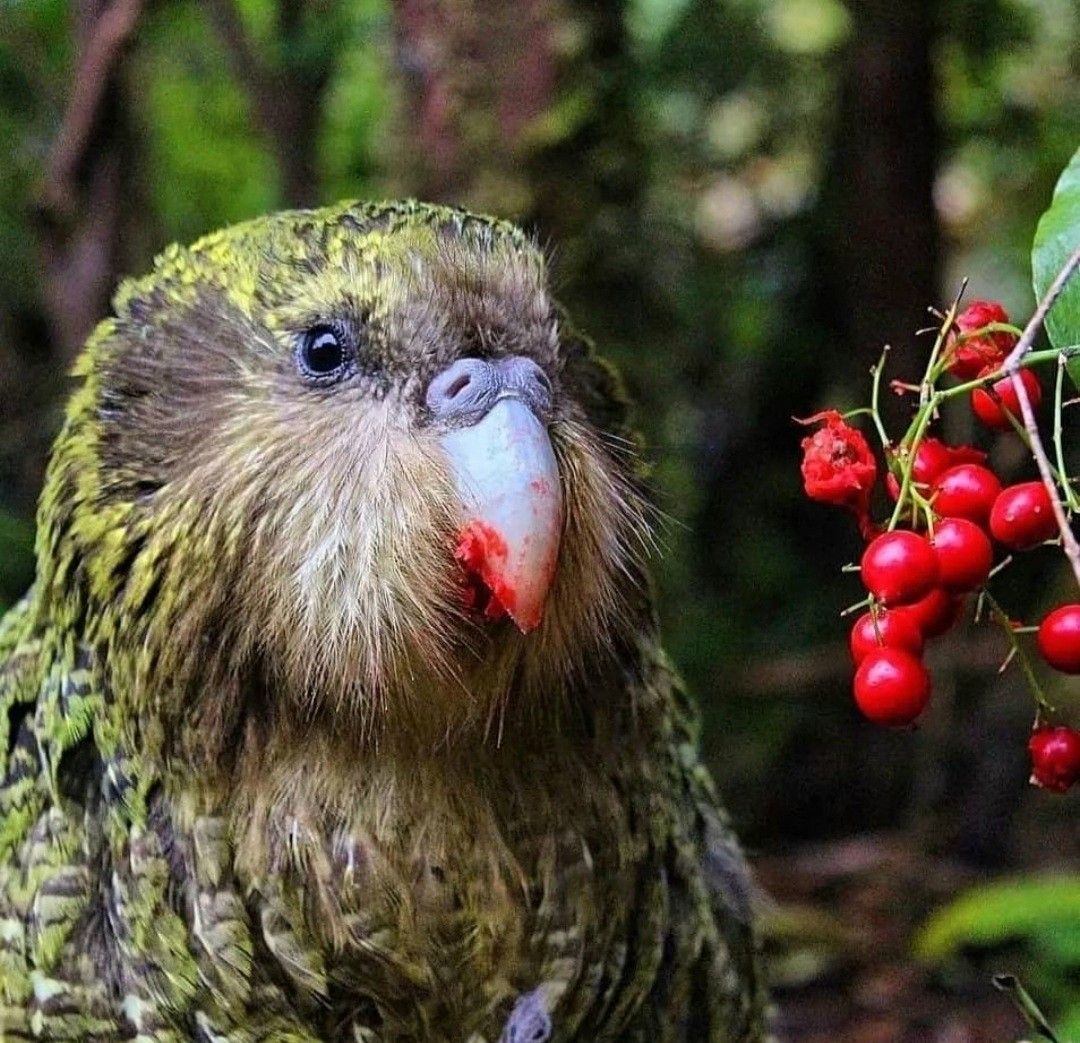
The Kākāpō (Strigops habroptilus) of New Zealand is one of the most extraordinary birds on Earth. Unlike most parrots, it is flightless, using its strong legs to walk and climb through forests rather than take to the air. A fully grown adult can weigh over 3 kilograms, making it the heaviest parrot in the world.


Covered in soft, moss-green feathers that blend into the forest, the Kākāpō might seem well-camouflaged — but it carries a unique floral fragrance, often described as sweet and herbal, which unfortunately makes it easier for predators to track.
Once widespread across New Zealand, the species was nearly driven to extinction after the introduction of cats, stoats, and rats. Thanks to intensive conservation efforts — including hand-rearing chicks, island sanctuaries, and genetic monitoring — the population has slowly risen from just a few dozen individuals to over 250 birds today.
The Kākāpō is also remarkable for its unusual breeding system: males gather in “leks”, where they produce deep, booming calls that echo through valleys to attract females. Breeding occurs only in certain years, tied to the fruiting of native trees like rimu.


Though still critically endangered, the Kākāpō stands as a symbol of hope — proof that with dedication, even the rarest species can be brought back from the brink of extinction.