
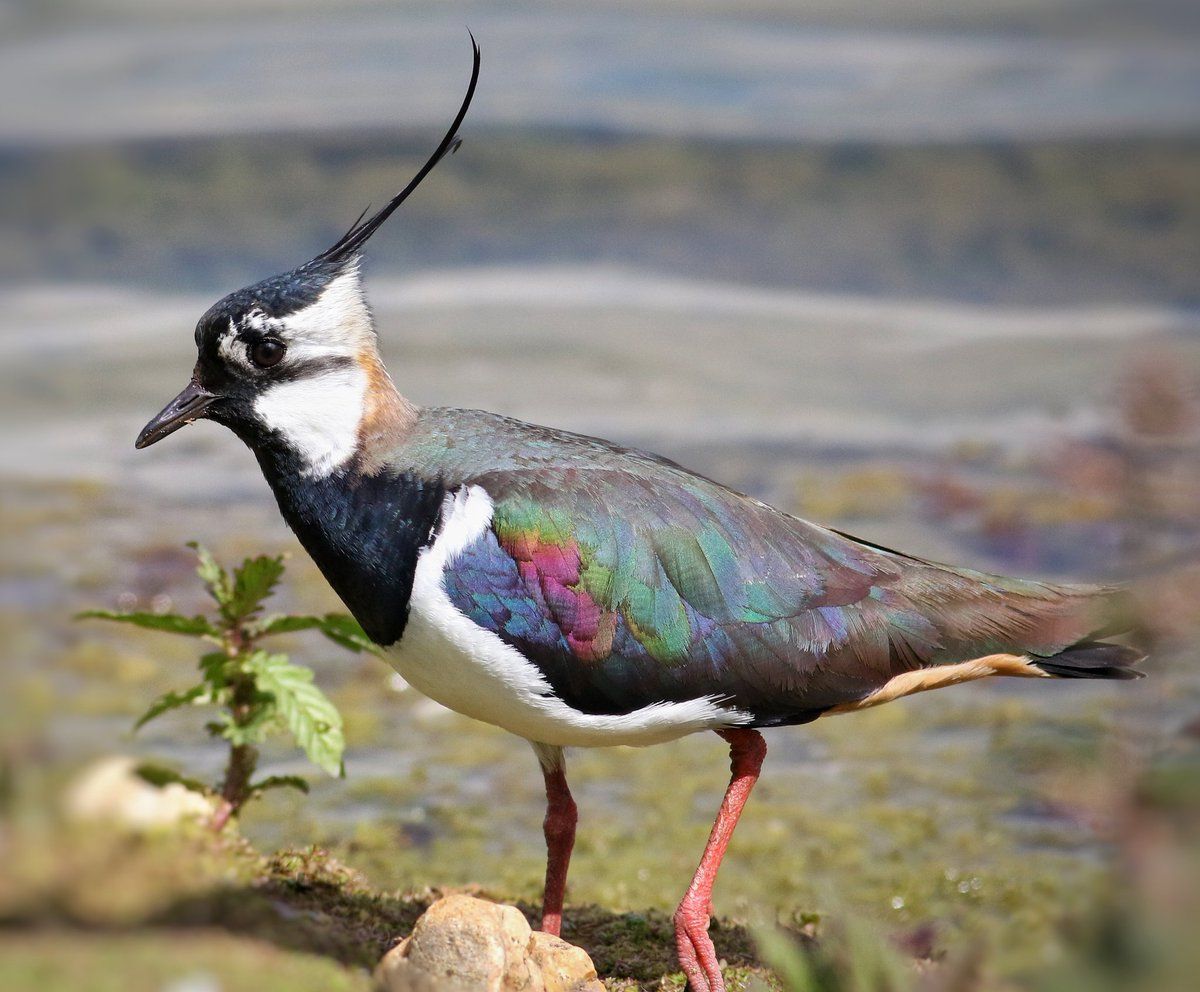
Across the wetlands and rolling farmlands of Europe and Asia, a bird rises with a cry that sounds both sharp and mournful. The Northern Lapwing (Vanellus vanellus), with its striking black-and-white plumage, iridescent green wings, and a long, wispy crest, is as much a symbol of open countryside as the fields themselves
Known for their dazzling aerial displays, lapwings are true sky acrobats. In spring, males take to the air in tumbling, twisting flights, diving and rolling while calling out in a strange, electronic-sounding pee-wit. These spectacular performances are both a defense of territory and a serenade to attract a mate.
On the ground, lapwings are equally distinctive. They walk with a deliberate stride through damp meadows and marshes, probing the soil for insects, worms, and larvae. Their sharp eyesight makes them skilled hunters, but they are also fiercely protective parents. When danger approaches the nest—a shallow scrape lined with grass—they will mob predators, feigning injury or swooping down in bold attacks to drive them away.
For centuries, Northern Lapwings were familiar companions to farmers, their presence marking healthy farmland and wet pastures. In folklore, they were often seen as messengers of the seasons, their calls announcing the arrival of spring. Yet today, their numbers are falling. Agricultural intensification, drained wetlands, and habitat loss have pushed lapwing populations into decline across much of their range.


Still, where meadows are left wet and wild, the lapwing’s voice carries on. Watching a flock take flight at dusk, their broad wings catching the last of the sun, is to witness resilience wrapped in iridescence—a reminder that even the most acrobatic of birds needs a safe stage upon which to dance.