
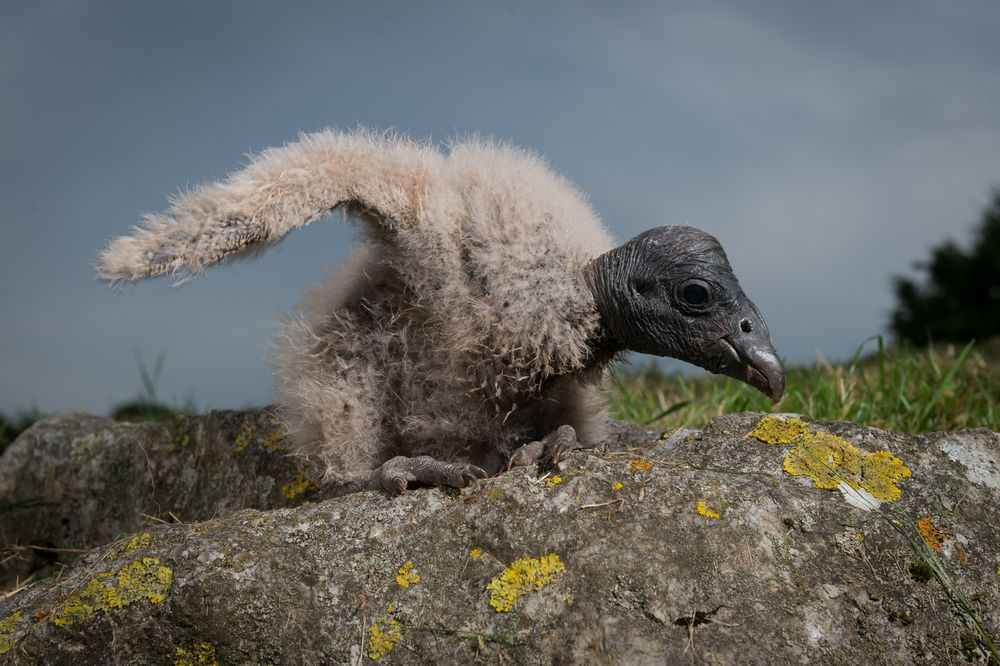
High above the jagged spine of South America’s Andes Mountains, a shadow with outstretched wings once ruled the skies. The Andean condor (Vultur gryphus) is not only one of the largest flying birds on Earth, with a wingspan reaching up to 10 feet, but also one of the most enduring—living as long as 50 years in the wild. For Indigenous Andean peoples, the condor has long been a sacred symbol of power, endurance, and even immortality. It is honored as the national bird in countries including Chile, Colombia, Bolivia, and Ecuador.


Yet today, this sky sovereign faces an uncertain future. Human expansion into the condor’s domain has transformed its once-boundless kingdom into a dangerous gauntlet. Wind turbines and power lines interrupt its soaring journeys, sometimes fatally. More insidious is lead poisoning—fragments from bullets left in hunted carcasses seep into the condors’ bloodstream, weakening and killing them slowly.
In rural regions, the threat escalates further. To protect livestock from predators like pumas and foxes, some farmers leave out poisoned bait. Though not intended for condors, these toxic traps often claim them as collateral victims. While direct hunting and poaching are less common today, they still occur, chipping away at populations already under strain.
The Andean condor is not just another vulture—it is a keystone species, a cleaner of ecosystems, and a cultural icon. Without it, both nature and heritage lose a guardian. Conservation programs are working to counter the decline through captive breeding, habitat protection, and education. But its survival ultimately depends on human choices: whether we can find ways to coexist with a bird that has watched over the Andes for millennia.


If the Andean condor vanishes, the sky will lose one of its oldest rulers. To save it is not only to preserve a species, but to keep alive a living symbol of strength, freedom, and endurance.