
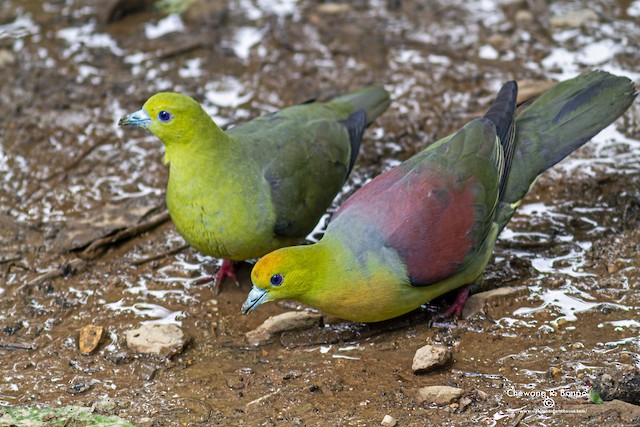
In the warm canopies of South Asia, where banyan and mango trees spill their fruits into the sun, a flash of green wings signals the arrival of the Yellow-footed Green Pigeon (Treron phoenicoptera). Known locally as the Hariyal and sometimes nicknamed the “mango bird,” this pigeon is as much a part of the landscape as the orchards it adores.


Unlike the common city pigeons that clatter along rooftops, this bird wears a far more elegant attire—plumage washed in soft shades of lime and olive, with wings brushed in slate-gray and legs dipped in bright saffron yellow. Its colors blend perfectly with leafy treetops, making it almost invisible until it takes flight in a sudden burst of green and gold.
Yellow-footed Green Pigeons live in small flocks, their mellow cooing often the only clue to their presence. They are fruit specialists, feasting on figs, berries, and mangoes. Unlike most pigeons, they’re agile in the treetops, climbing nimbly among branches rather than strutting on the ground. By devouring fruit and dispersing seeds far and wide, they play a quiet but vital role in keeping forests and orchards alive.
In many parts of India, their arrival is celebrated—seen as a signal of abundance, of fruiting seasons, and of healthy groves. They’re also the state bird of Maharashtra, a symbol of both natural beauty and ecological balance.


Graceful, gentle, and often overlooked, the Yellow-footed Green Pigeon is a reminder that not all pigeons live among concrete. Some still thrive among the trees, painting orchards with soft green wings and saffron feet.