
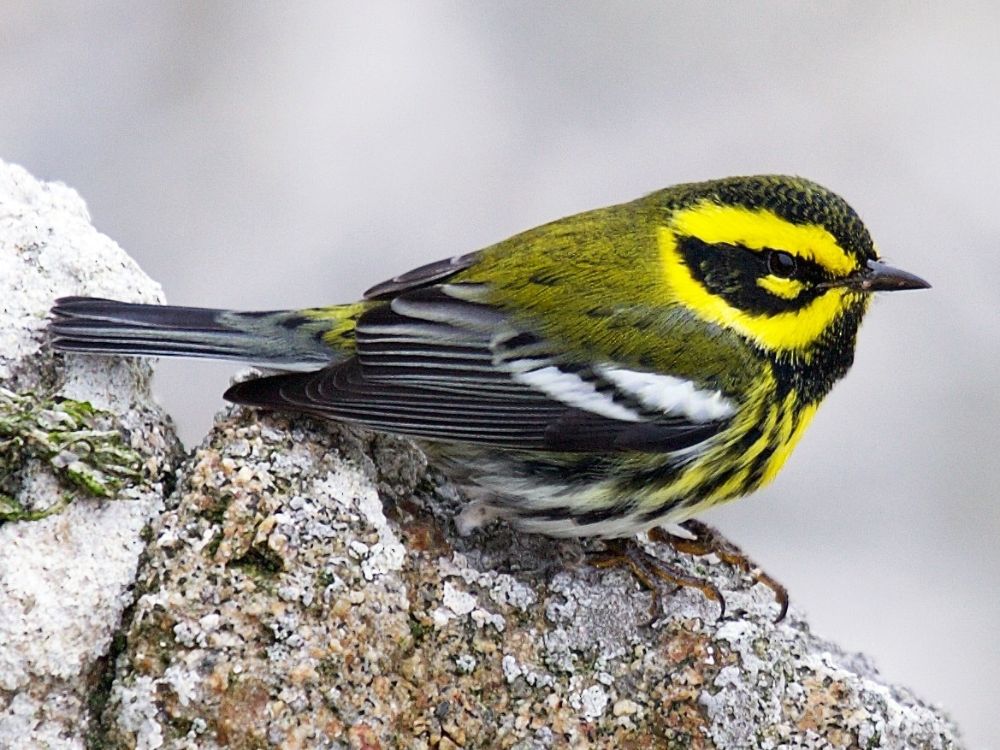
The Townsend’s Warbler (Setophaga townsendi) is a small, insect-eating songbird of western North America. It breeds in conifer forests from Alaska to the Pacific Northwest and migrates thousands of kilometers each year to spend the winter in Mexico and Central America — sometimes even reaching Nicaragua and Panama.
A remarkable fact about this species is its hybrid zone with the closely related Hermit Warbler (Setophaga occidentalis). Where their ranges overlap, the two species interbreed freely, producing hybrids with mixed facial patterns. This ongoing contact zone in the Pacific Northwest is one of the best-studied examples of speciation in progress among North American birds.


Townsend’s Warblers feed mainly on insects and spiders, gleaning them from conifer needles or catching them midair. During migration and winter, they may join mixed-species flocks, playing an important role in insect control within forest ecosystems.
Despite their long migrations, these warblers remain fairly common. However, their dependence on mature conifer forests means that large-scale logging and climate change could threaten their breeding habitats in the future.