
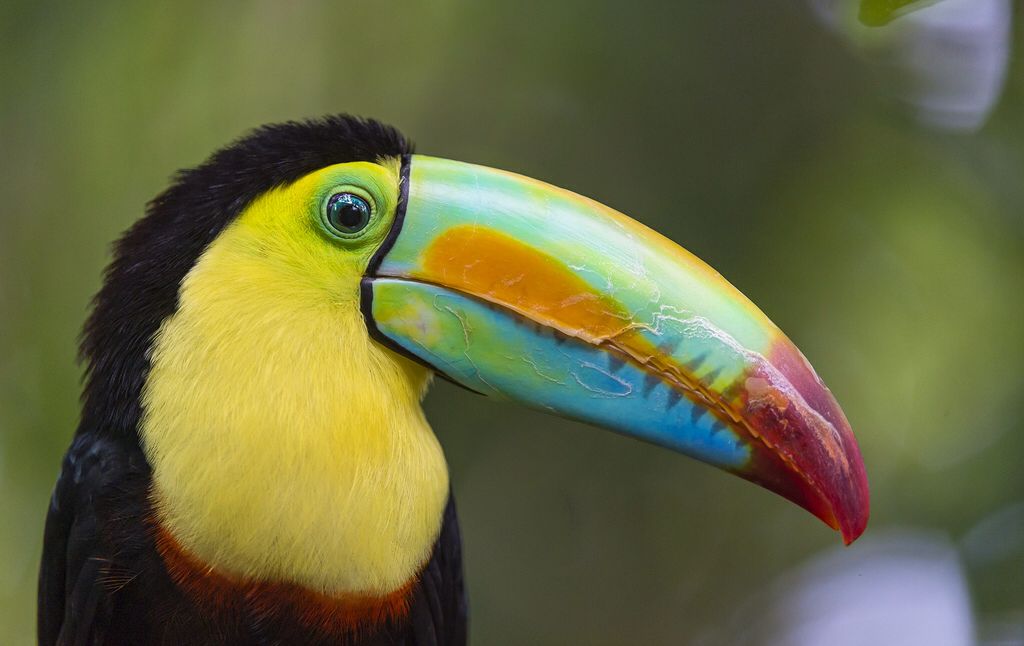
After a toucan dies, its enormous bill can take up to six years to fully decompose under natural conditions — far longer than feathers, bones, or soft tissue. The reason lies in the bill’s unusual chemistry and architecture.
A toucan’s bill is made of a keratin outer shell (the same protein found in hair and nails) wrapped around a lightweight internal framework of bony struts and air pockets. This honeycomb-like structure gives the bill both strength and low weight — up to one-third the size of the bird’s body but only a few percent of its total mass.


Keratin is highly resistant to microbial breakdown because its protein chains are tightly cross-linked with sulfur bonds, making it tough for bacteria and fungi to digest. In dry tropical environments, where many toucans live, the lack of moisture slows decay even further.
Even after the organic tissues disappear, the bill’s keratin sheath can remain intact for years — sometimes preserved by collectors or found in forest litter long after the bird itself is gone. It’s a natural example of biological engineering optimized for endurance and efficiency